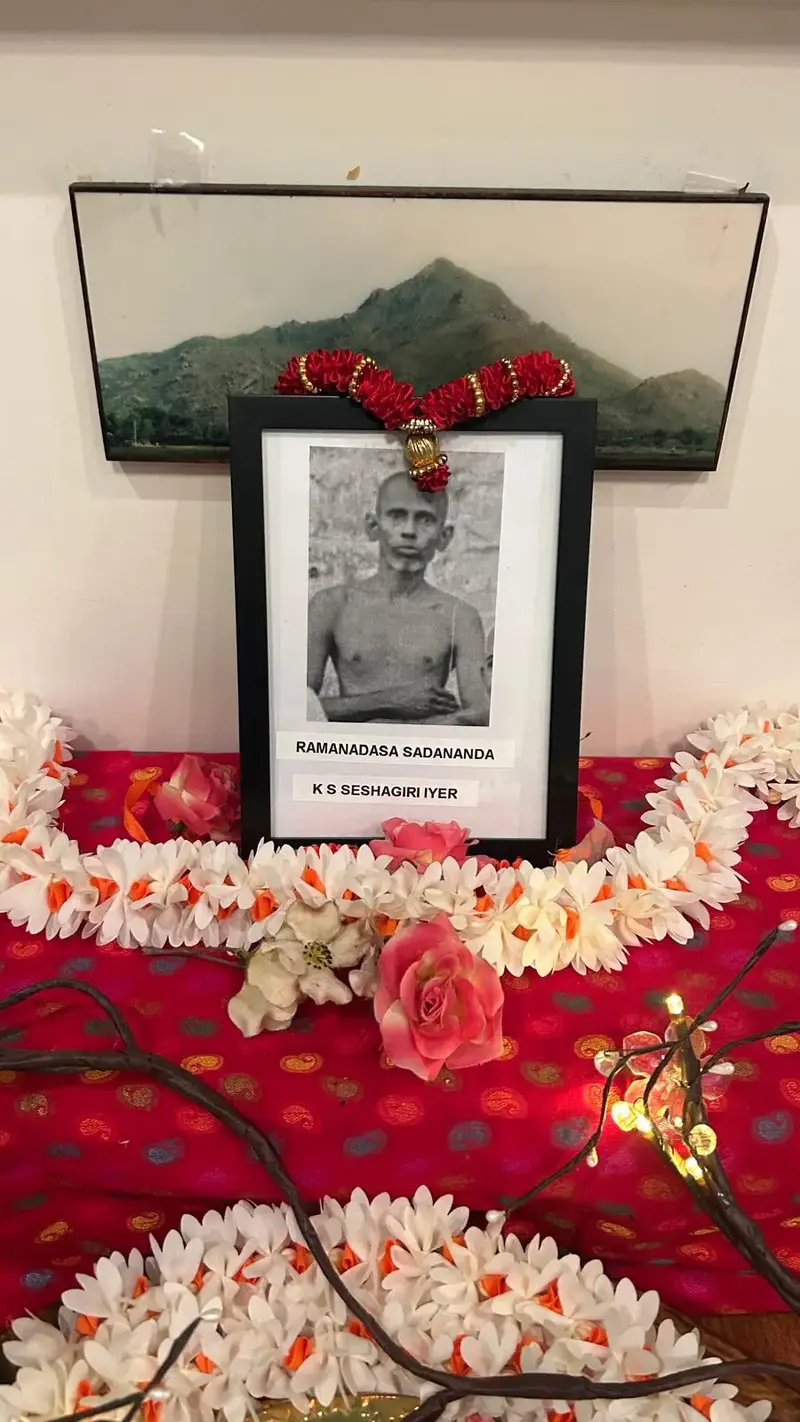
T.S.Seshagiri Iyer
Ramanadasa Sadananda
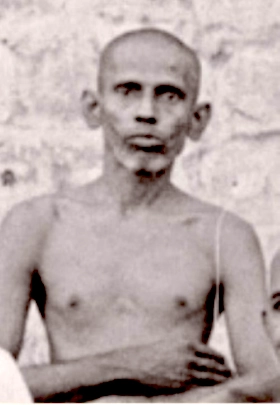
K.S.Seshagiri Iyer was a well-educated school teacher working in PS Highschool in Madras. Born in a devout family, he had a spiritual bent from his early childhood. As he grew older, he was drawn to Shankara’s and Vivekananda’s teachings. Yet, he had many questions and concerns about the validity of all that he had read and heard. In his own biographical account, he states that the most significant life altering event happened in a cave on the slopes of Arunachala. He records that on Tuesday, Oct 19th, 1915, he had his first darshan of Bhagavan at Virupaksha cave. He was accompanied by his brother-in-law. Hitherto an eloquent man with great felicity with words, he was literally dumbstruck and after prostrating he sat transfixed drinking deeply the bliss of being in Bhagavan’s presence. Paraphrasing his biographical account - he felt all dualities melt away and was amazed at how even the saddest person in the room felt an upsurge of peace and happiness. The conviction that one was in the divine presence was a tangible feeling that can never be properly expressed in words.
Of course, he regained his ability to speak and he came back the very next day to ask Bhagavan questions that had been gnawing at him for a while. Bhagavan was then splitting his time between Virupaksha cave and Skandashram. So, when K.S.Seshagiri came back on the 20th, he found Bhagavan in Skandashram. In his biographical note he recorded the following conversation.
Seshagiri Iyer: Advaitins maintain that jivas are a mere reflection of the Supreme being. However, intellectual giants like Ramanuja and Madhvacharya convincingly argue that the individual jiva is eternally separate and is a subordinate of the Supreme being even after their attainment of salvation. Which is correct?
Bhagavan: Each is true, at different stages.
Seshagiri Iyer: So, the ultimate truth is that which is propounded by the advaitin?
Bhagavan: Yes
Seshagiri: I believe you concede that the soul in its real nature and origin is nothing less than God.
Bhagavan: Yes. There is but One Being devoid of all qualities and beyond all states of death, birth, decay, progress etc. It is described as Satchitananda.
Seshagiri: If Ishwara is omniscient, how come He that dwells within this decaying body for however brief a time, be ignorant of His own nature and even worse - be a victim of Maya to boot?
Bhagavan: A mother wakes up her sleeping child and feeds him milk at 11pm. In the morning at 7, the child does not remember having drunk milk the previous night. He maintains that he did not drink while the mother states the contrary. Now, which of them speaks the truth?
Seshagiri: Of course, the mother. But the child will also believe it if by straining his memory he could recall having drunk that milk.
Bhagavan: Even so, the spiritual child has to, by stress or strain, realize his oneness with the Supreme which the Strutis (Vedas)and Guru declare in no uncertain voice.
Seshagiri: How am I to ascertain who I am?
Bhagavan: Question yourself and learn that you are neither the body, the senses, the prana(life) nor the mind, nor ignorance. For all these are insentient while you are the Sat (the real).
Seshagiri: But the mind plays demon placing perpetual obstacles, how to overcome it?
Bhagavan: Mind is nothing but thoughts with the root thought “I” the ahankara. When the question “Who am I” preponderates, it kills all other thoughts at first and is itself gone ultimately.
Seshagiri: What is it that displaces or is found at the back of the disappearing ego?
Bhagavan: Even as the rope is seen with the vanishing of the illusion of the serpent, the all-knowing I devoid of all qualities and fear of Maya is felt to the exclusion of all duality and plurality.
Seshagiri: O Lord, how full of bliss I shall be when I achieve that consummation!
Bhagavan: What is there to achieve while you are already that Sat-Cit-Ananda... like the silk worm which weaves its own web and crushes itself by being caught within its tightening folds, the ignorant man yields to the mind and is immersed in a world of misery, though in reality he never ceases to ‘Be’.
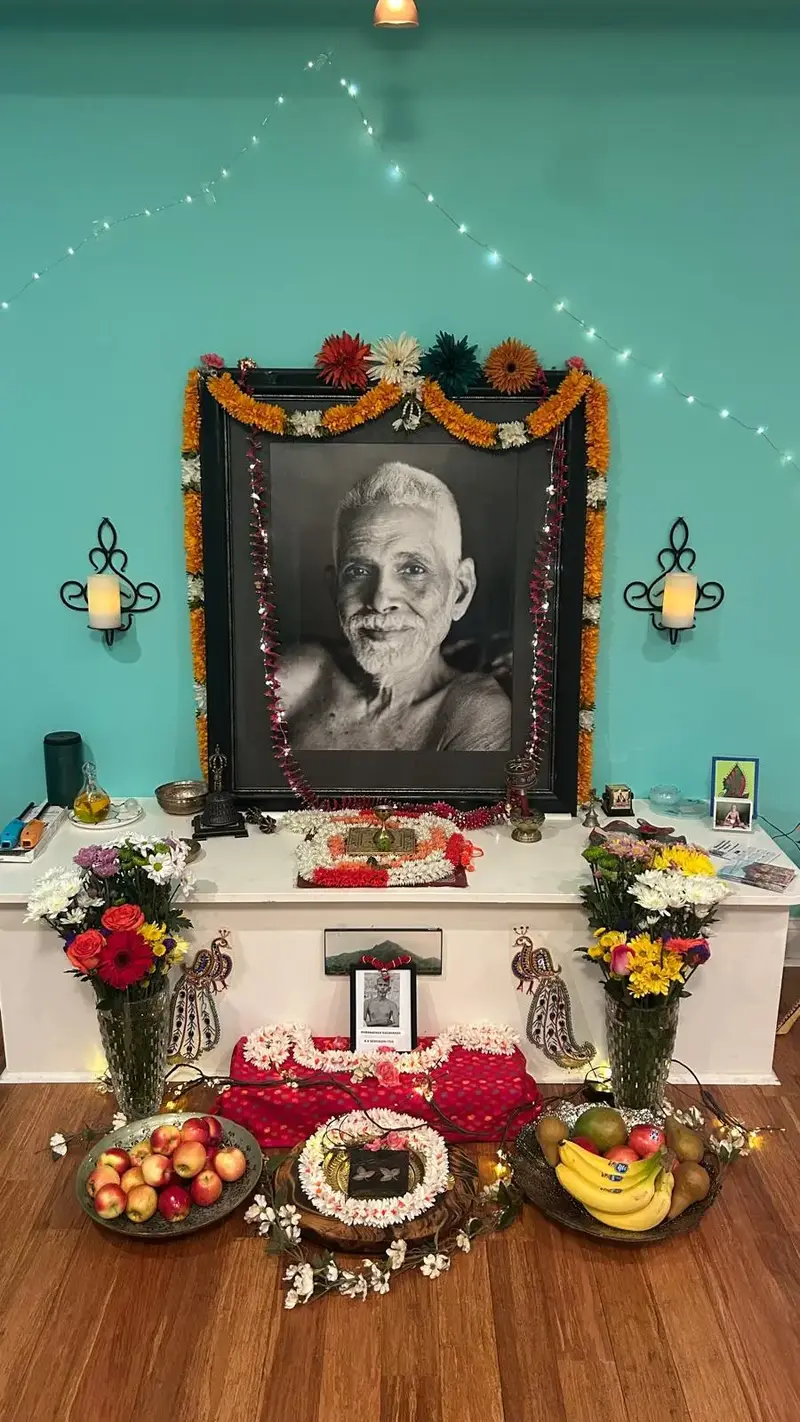
With this conversation, Seshagiri Iyer gained clarity and became devoted to Bhagavan. His visits became more frequent, and he has shared many events that bolstered his conviction of the Grace of his guru - Bhagavan Ramana Maharshi.
In his biographical account, K.S.Seshagiri [KSS] has shared some anecdotes from his life. As noted previously, his father was a devout man. He chanted the Rama tharaka mantram many times during the day. Even though he had heard about Bhagavan Ramana, he had never seen Bhagavan in person. Once while they were living in Madras, he became violently ill and all hopes of recovery were lost. As he lay in the bed in the afternoon around two pm, he had a vision of Bhagavan appearing in flesh and blood holding an abhaya mudra and saying to him “Don’t worry! You are saved”. Needless to say, his father made a complete recovery. When his father shared this experience with KSS, he had his first taste of Bhagavan’s omniscience.
Pretty soon his entire family became deeply devoted to Bhagavan.
In 1916 there was a smallpox epidemic in Madras and KSS contracted it and was so sick that he feared that he would not survive. His faith deepened with his recovery and blossomed further with other life events.
Once in 1921, KSS brought Sarada, his 8-year-old daughter, with him to spend a few days in Skandashram. She loved to be in the presence of Bhagavan and did not want to leave. When it was finally time to leave, she could not be convinced. First, he told her what if the snakes or tigers get to her. She said, “Bhagavan says that the same paramatma that is within me is within them, so I am not afraid of them”.
What about food? She said, “Why?!"
There are a lot of people that bring food here and she would be fine. Moreover, wasn’t she with God himself!
Hearing that KSS asked how so? She quickly replied who else could have made water spring from a mere rock in Skandashram!
With great difficulty he convinced her and took her back home. That was her first and only visit and she passed away before she could turn 10. KSS was convinced that such a blessed child who got to see Bhagavan in Skandashram was back safe with Him for eternity and made peace with the loss of his child.
In 1929, he brought his niece along. She was very curious when she was told that Bhagavan knows what she wants and what she thinks and there was no need to ask for anything. This ability to read minds was very intriguing for her. During her visit, someone was chanting verses from Thiruvachagam. She did not understand the phrase “Undeepara”. To her surprise Bhagavan explained the meaning of the word ‘Undeepara’ without anyone asking. At the time of her visit a dog in the ashram was sick and she was curious what was wrong with the dog. Again, Bhagavan without anyone prompting discussed the health of the dog and the reason for his illness. One can only imagine how amazed the child must have been.
Besides these personal accounts, KSS has also recorded the anecdotes shared by other devotees with him.
1. A relative and bhakta of Bhagavan (presumably Viswanatha Swami) asked Bhagavan how is it that advanced seekers steeped in meditation do not have thirst or hunger for days on end? Bhagavan replied that during the day we have three or four meals but, at night, we take only one even though technically the duration of day and night is similar. What makes one not eat as much during the night is because we are absorbed in sleep and the body needs less food. Similarly, the meditating mind is absorbed in the Self and that is why there is no urge to eat or drink. Most of us were intrigued by Bhagavan’s stay in Patalalinga. How fortunate were these devotees asking Bhagavan such questions!
2. Narayana Reddiar, another devotee from Virupaksha days shared this with KSS: it was a day when it was raining incessantly on the hill. About 30 devotees including Narayana Reddiar were inside the Virupaksha cave with Bhagavan. Since the rain never let up, no one could go for bhiksha. The food that was available was barely enough to satisfy three people. After waiting for a while, Bhagavan asked them to share the available food among all devotees. Much to the amazement of all, everyone felt completely satiated. This reminded Reddiar of the incident in the Mahabharata when Durvasa Muni, known for his extremely short fuse, came with a retinue of his students to where the Pandavas were staying and announced that they would like to be fed after they come back from their bath. Draupadi did not know what to do because she had just finished washing the Akshaya patra - the vessel that has perpetual food once a small amount is cooked in it. By divine Grace the washed vessel still had a small morsel of the previously cooked food. Sri Krishna, understanding the predicament, consumed that one morsel and much to the amazement of all present, Durvasa muni and his students felt that their stomachs were already full after their bath, and they left without coming back for their meal. Narayana Reddiar felt that he saw an enactment of something similar that day in Virupaksha cave!
3. Seshu Iyer, an advocate in Cocanada (modern day Kakinada), who has translated Ulladu Narpadhu and Naan Yaar into English stated this anecdote to KSS. Once Cow Lakshmi touched Bhagavan’s feet and stood there hoping to receive a treat from Bhagavan. Bhagavan, knowing that she loves a particular kind of plantain that grows on the mountains, looked for it and noticed that they did not have any. Just as he was consoling her about this predicament, an ashramite rushed to the scene announcing that someone had sent two large baskets full of mountain plantains from Palani hills. Such is the compassion of the benevolent guru!!
4. Dandapani Swami, father-in-law of Muruganar, had the habit of frequently going on pilgrimage to Haridwar. During one such pilgrimage, he had this intense desire to return to Tiruvannamalai and be with Bhagavan. Sadly, that was not an option becuase of his finances. Out of thin air, a bunch of Kashmiri lady devotees found him particularly pious and provided him a good meal and paid for his return trip to Tiruvannamalai. How earnest must have been his yearning to experience such a miracle!
KSS had also recorded anecdotes about Niranjanananda Swami, Ramaswami Pillai. but the original manuscript was lost!
At what point KSS became Ramanadasa Sadananda[RDS] is not very clear. This autobiographical account which has been our reference was published in 1933 and in it KSS refers to himself only as Ramanadasa Sadananda.
Here are some other references to KSS/RDS:
- Pictorial Biography,
Sri Ramanasramam:
I was alone with Bhagavan in Skandashram. Bhagavan was inside and I was sitting on the steps leading up to the ashram. Just then a man came up with his family and asked me if they could have darshan of Bhagavan inside the ashram since they belonged to the so called “untouchable class”. I started to go inside to ask for permission from Bhagavan, and I realized what an insult that would be and turned around and beckoned them to go inside stating that they would be welcome. The whole family prostrated and sat in front of Bhagavan and for about ten minutes Bhagavan’s benevolent gaze fell on them continuously. I have seen rich and famous and many elite people fall at His feet, but none vouchsafed such Grace.
- Day by Day with Bhagavan
– A.Devaraja Mudaliar
KSS was present when Sri Jamnalal Bajaj and Sri Rajendra Prasad visited Bhagavan. Jamnalal did most of the talking and Rajendra Prasad was mostly quiet in Bhagavan’s presence. Jamnalal asked Bhagavan why a generous person like Rajendra who gave up a lucrative law practice to serve his country is plagued by health issues like asthma. Bhagavan was silent for a while and then replied “This body itself is a disease, so that is a disease of a disease”.
- Self-Realization
– B.V.Narasimhaswami
KSS and his family were getting ready to take leave from Bhagavan after a visit. KSS’s wife was fighting back tears from thoughts of separation. Bhagavan said, “If you strenuously think I am at Mylapore in your house, you can feel my presence there”.
- The Mountain Path,
Jan 2024

Blessed is the man who looks upon everyone as God. When someone questioned how Bhagavan felt when so many prostrated before him, He replied “Even before they enter the room, I pay my obeisance to them”. Once when Seshagiri Iyer on meeting Bhagavan on the hill said he has received Bhagavan’s darshan, Bhagavan said, “why don’t you say you gave me your darshan?”
- Ramana Reminiscences –
G.V.Subbaramayya
Bhagavan was joking with child Ganesan. Sri Bhagavan pinched his hand and pleaded, “I have pinched ‘Ganesa’ and not ‘you’!”
Now, as I was walking by His side, Bhagavan narrated to me a similar incident that had taken place a few years ago. The youngest son of KSS stood before Bhagavan and said “Bhagavan, touch me” and I did just like this and he touched GVS’s hand. Then that child said, “You touched my hand, but did you touch ’me’?” I wondered at the child’s retort, concluded Bhagavan, as he re-entered the Hall.
Just like Bhagavan, we have to wonder what exactly that little child of KSS actually meant. Obviously spiritual attainment is never linear🙏🏽
— to be continued
Ramanadasa Sadananda was not only an ardent devotee of Bhagavan but also a prolific writer. He is one of the devotees mentioned in perhaps the first Ramana Thiruthondar Thogai – A poetic ode to the many devotees of Bhagavan Ramana Maharshi written by Sadhu Natanananda.
He has written quite a few spiritual books. One of them is Ramana Sthuthi Dasakam which was published by him in 1933. Most of the biographical references mentioned here are from that book which is currently out of print. He has written a few songs in Tamil explaining the bliss of being in Bhagavan’s presence and some bhajans reflecting his ecstatic joy.
He has also written a few poems in English. When the Golden jubilee of Bhagavan’s Advent was celebrated in 1946, there is a mention about a poem composed by him being recited in front of Bhagavan on that holy day. (Day by Day)
One poem is a moving account of the origin of Bhagavan’s famous advice about the pace at which Giri pradakshina should be performed.
Here is the gist of that poem. A lady in her 8th month of pregnancy came to Bhagavan and pleaded him to intervene in the safety of her pregnancy. She had borne four boys previously and they all died soon after birth. She desired to go around the hill seeking a healthy newborn that would live and thrive. Bhagavan was really moved. He, along with thirty devotees, accompanied her on the Giri pradakshina. They started at dusk and walked slowly. On the way there was an instance when a snake climbed over Bhagavan’s foot in the dark. Bhagavan stopped and remarked that they should never walk at a pace more than a mile an hour so that they don’t disrupt other beings in the dark. They joyfully chanted and sang through the night and by the time they finished the circumambulation, it was dawn. The pregnant woman finished it safely and 2 months later she gave birth to a healthy newborn that continued to thrive.
This is the only publication we could find in which the above event has been documented and that too as a truly beautiful poem.
In another interesting poem he wrote about the inauguration of the Madras Ramanasramam on May 11th, 1932. The poem bears the date as its title and seeks the blessing of Bhagavan as they are about to install a bromide enhanced black and white photograph of Bhagavan in a place in Georgetown (Current day Parry’s corner), Madras. After its inauguration they had daily meetings, monthly Punarvasu day Satsangs and fed and satisfied a lot of devotees physically and spiritually. The address quoted is: 2/28 Mooker Nalla Muthu Street, Georgetown, Madras. Technically this would have been the first Chennai Ramana chapter in Satsang history!
We are deeply grateful to the Kovilur Andavar library for generously uploading all these out-of-print books for public view 🙏🏽
🌸🙏