

The Stone Statue
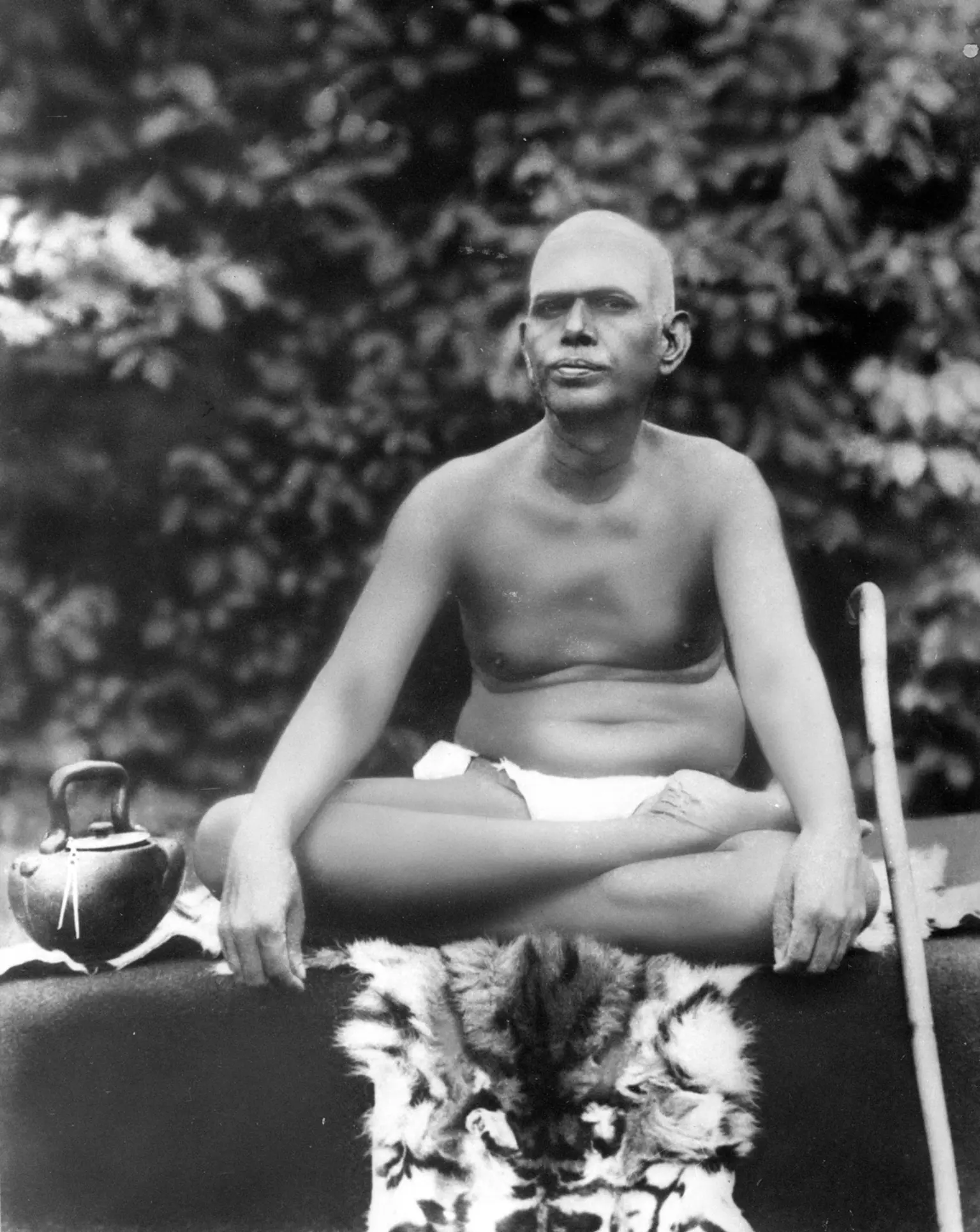
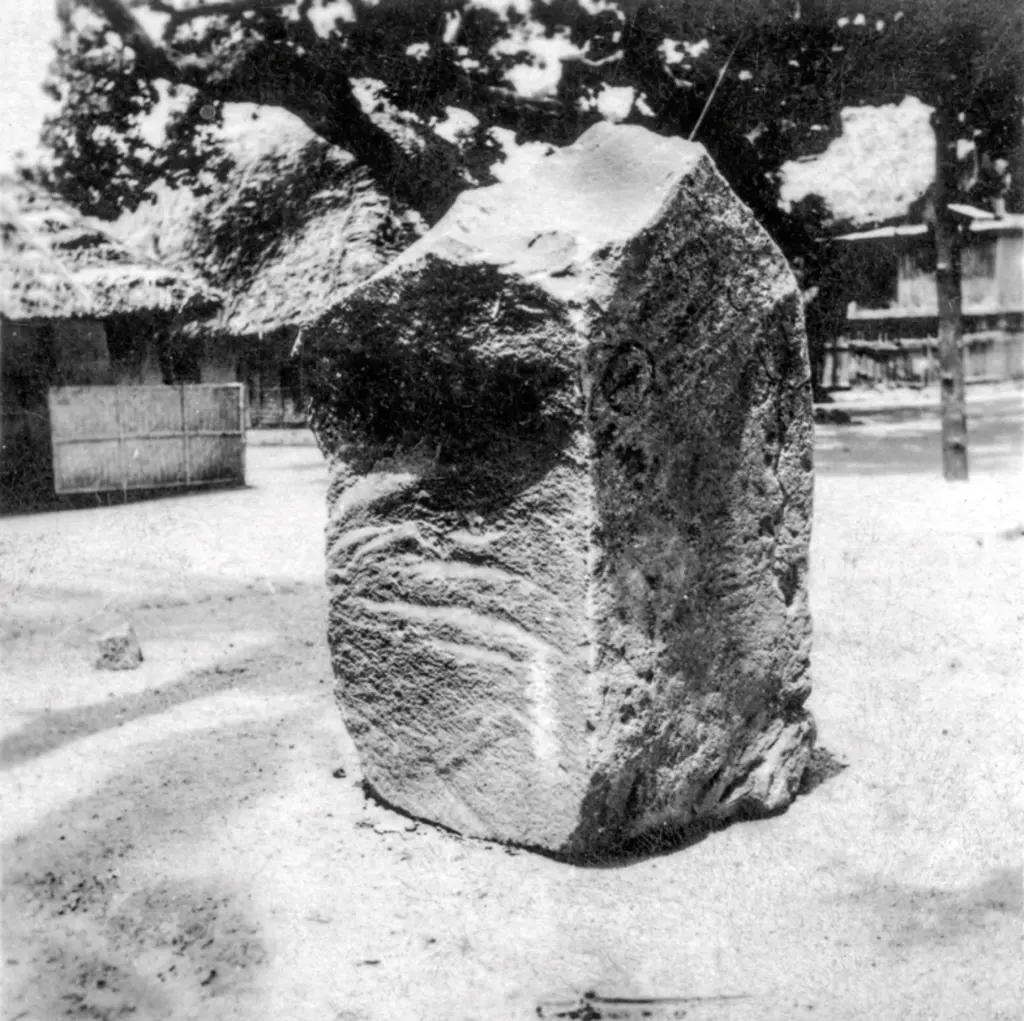
A sculpted likeness of Bhagavan began in June of 1949. Vaidyanathan Stapathi, the Mother’s Temple architect, was assigned the project. Large granite stones were acquired for both the statue and a stone couch for Bhagavan to sit on in the New Hall. For the statue, a chalk likeness of Bhagavan was initially sculpted. This was a standard procedure for sculptors of those times. Normally the chalk image was broken up when the practice session was completed. The sculptor and devotees did not have the heart to demolish a likeness of the Master in whatever medium, so it was decided to bury the chalk statue to the east of Lakshmi’s samadhi, where it now quietly lays.
Everyone knew how difficult an endeavor it was to capture not only the likeness but the power of the Master in a stone. Nevertheless, the administration believed that this will be another historical artifact in the history of this great sage of the 20th Century, a legacy that will continue for centuries to come.
Vaidyanathan Stapathi, the highly skilled perfectionist that he was, took great pains to measure the length and width of all of Bhagavan’s physical features, but it was decided to depict him when he was in his prime of health. They scrutinized the numerous photographs taken of him sitting effortlessly in padmasana pose. In fact, the most popular image of Sri Ramana from the 1930s was the photo that we see him sitting in padmasana pose at the Ramana Mandiram in Madurai, though that is a painted version. The above photograph is the one ultimately choosen to reproduce in the form of a stone statue. And if scrutinized one does see how wonderfully the Stapathi succeeded in mirroring this photograph in a sculpted form.
This stone statue adorns the New Hall in front of the stone couch where Bhagavan gave darshan for some months before he moved into the Nirvana Room during his last illness.
James Hartel of Arunachala Ashrama in New York took up the challenge of replicating this statue for the New York City Ashrama shrine. At the end of 1989, while visiting Sri Ramanasramam with his brother Dennis, the president T.N.Venkataraman allowed them full access to the statue to produce molds – 33 in all – that were carried back to New York and to the home of James.
Because of family and work responsibilities James was unable to commence combining all those molds together to make a master mold until 1996. It was a time-consuming and complex endeavor which took another year to complete. With the finished mold he produced two statues – one for the New York Ashrama and another for the Nova Scotia Arunachala Ashrama.
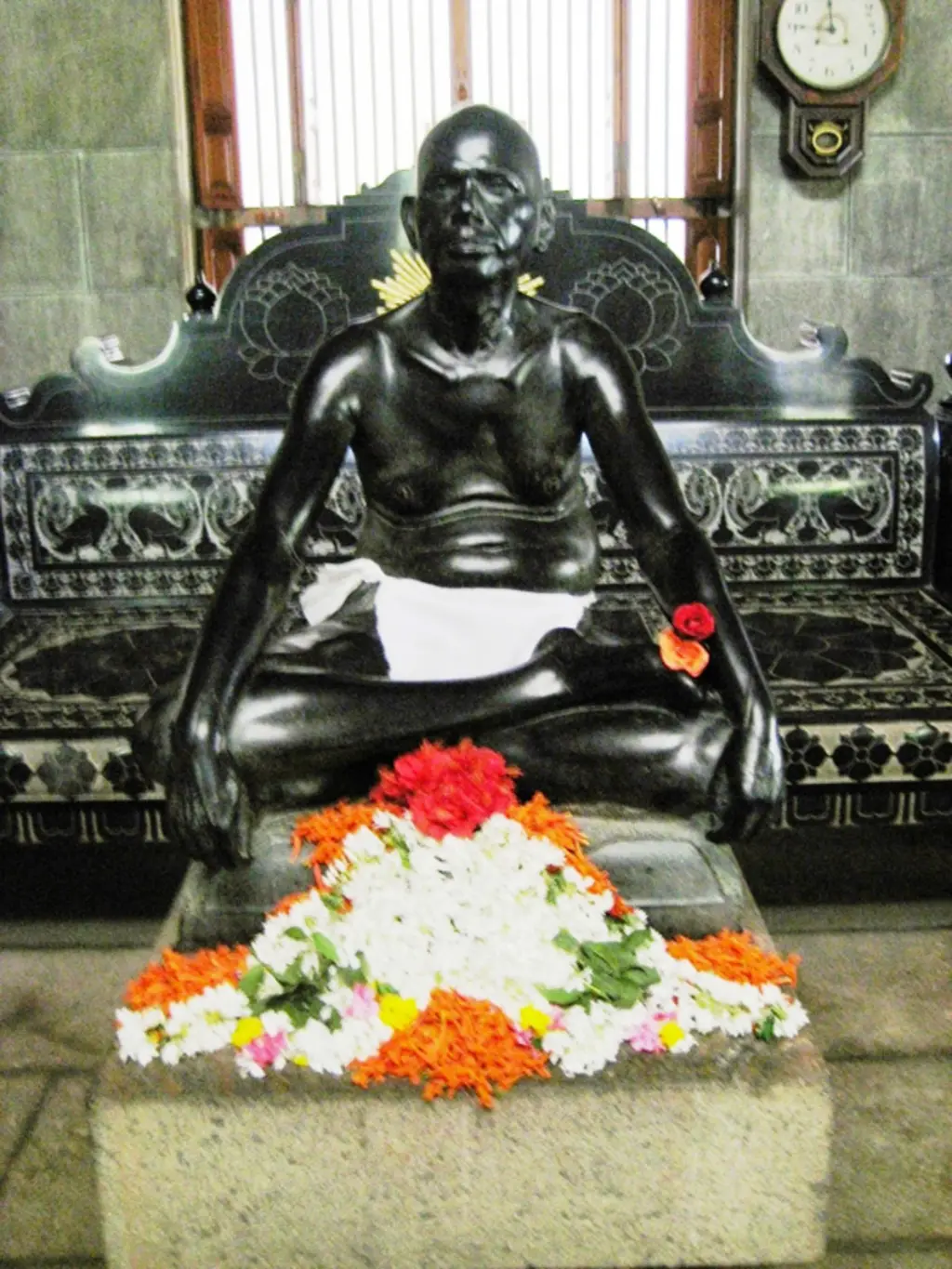
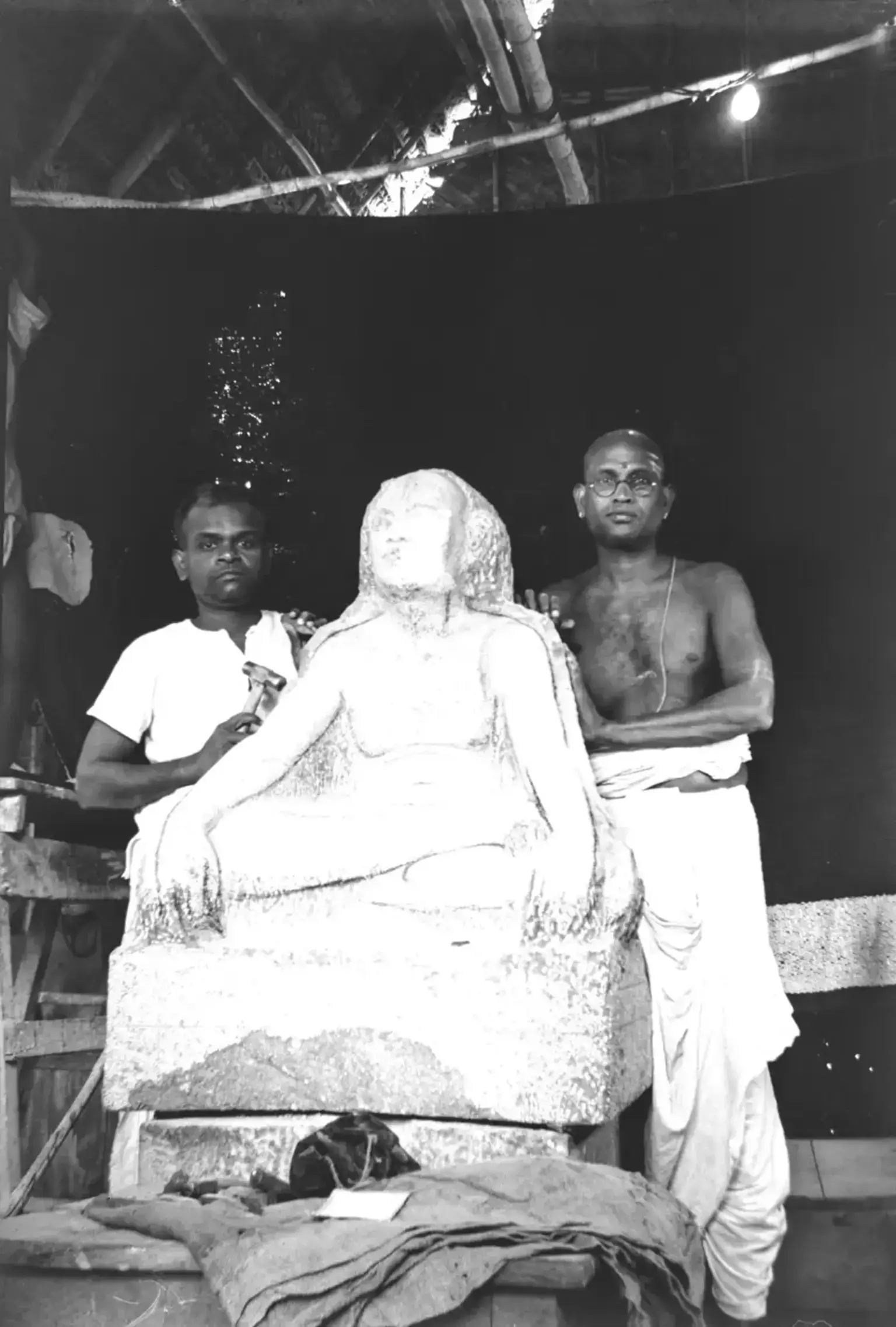

The question persists, does the sculpture in any manner radiate that unique divine presence of the Master? Those who lived with Bhagavan had doubts that this could at all be possible, and rightly so. How could just the sight of a stone have the power to open a heart to the eternal awareness that is our true nature like Bhagavan did for many decades while assuming a physical form? Yet, while sitting in the presence of this statue, whether in Sri Ramanasramam, or the New York or Nova Scotia Ashramas, in a shrine totally dedicated to his eternal presence and continued grace and guidance, one does feel that he who once had a definite form, though now formless, emits an influence upon the hearts of sincere seekers. How many times we have heard first-time visitors say “It looks so much alive” upon gazing at the statue.
When Bhagavan was very ill, a devotee pleaded to him not to leave his body. The Maharshi pointed to the sculptor working on his stone statue and said: “They are chiseling a Bhagavan who will give you darshan forever.”
Yes, now we have a stone image to remind us of his divine, eternal form that is at the source of our being, and which is our very own Self. Is there not something wonderful in all this?
Guru Purnima at Arunachala Ashrama
On Sunday, August 2 Arunachala Ashrama in New York City celebrated Guru Purnima with the Mahanyasa Purvaka Rudrabhishekam. It commenced at 7:30 a.m. and completed at 4 p.m. It was a grand and spiritually enthralling worship attended by about 70 devotees. In the article that follows, Swaminathan, who attended the puja, provides a concise description of the origin of Guru Purnima and the details of the worship.
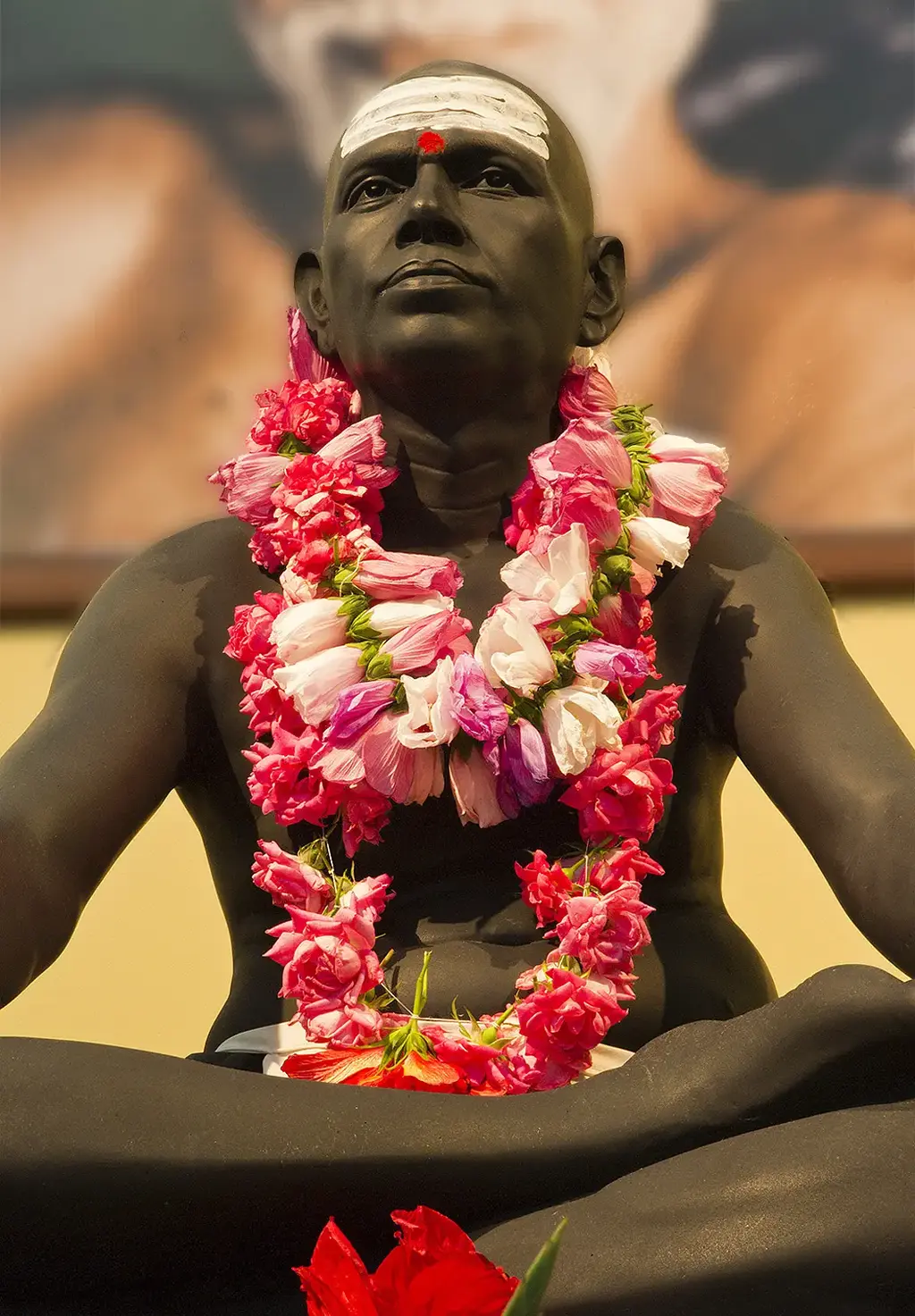
Hinduism is Sanatana Dharma, the eternal way. But could any individual be named as the founder? One person arguably comes closest — Krishna Dvaipayana (the dark one born on an island), whom tradition simply calls Vyasa — “the arranger.” The name is the tribute: he arranged the vast body of Vedic revelation and organized it into the four Vedas, then entrusted each to a disciple, along with the myriad styles of chanting so that it would survive transmission across generations. He gave the world its greatest epic in the Mahabharata, and within it the Bhagavad Gita, along with the eighteen Puranas. These carried philosophy to ordinary people through story, as in the revered Srimad Bhagavata and, not least, the Brahma Sutras that summarize the epitome of Upanishadic thought.
Born out-of-wedlock to a fisherwoman and sage Parashara, by the reckoning of birth alone he had no claim to the priestly order at all. Yet he is considered the perfect Brahmin. That lesson is not lost on the tradition itself: the Mahabharata has Yudhishthira tell the serpent Nahusha that a Brahmin is known by conduct and truthfulness rather than lineage. The Chandogya Upanishad has Gautama accept Satyakama Jabala precisely because the boy would not lie about not knowing his father, and the Vajrasuchi (“diamond needle”) Upanishad makes the conduct vs lineage argument outright.
Such is the giant whose birthday falls on the full moon of Ashadha (June–July). It is called Vyasa Purnima before it is called Guru Purnima. All spiritual gurus are honored on the birthday of this great teacher. It is also the day he is said to have begun the Brahma Sutras — so the calendar marks not just the person but the moment teaching itself became transmissible. Monastics begin Chaturmasya, the four-month retreat during the rains, when wandering ascetics settle in one place to study and teach. Buddhists observe the same full moon as the day of the Buddha’s first sermon at Sarnath, and Jains as the day Mahavira accepted his first disciple. Honoring Sri Veda Vyasa honors the whole chain of teachers reaching down to one’s own. Guru means “heavy” or “weighty”. The Niurka tradition, as Bhagavan pointed out, splits guru into gu = darkness and ru = that which removes or dispels. It is to this dispeller of darkness that students offer respects on this day. And in that tradition, devotees gathered at Arunachala Ashrama, New York to pay their respects to their guru Bhagavan Sri Ramana Maharshi, to Sri Vyasa and to the Adi guru Lord Shiva.
The Guru Purnima celebration at the ashrama involves the famous practice of chanting the rudri – or one namakam for each anuvaka of the Chamakam. These are perhaps the most chanted passages in the entire Vedic canon. The two halves do opposite things. The namakam is salutation — namo namah, over and over, to Rudra in every aspect and every location: to the fierce and the auspicious, to him in trees and rivers and mountains, to the arrow and the bow and the hands that hold them, the chief of potters, blacksmiths, carpenters, fishermen, dog-keepers, and even as the lord of thieves and hunters and cheats. It is an act of praise, placation and surrender. The chamika then turns and asks: cha me, cha me — and let this be mine, and this. Food, strength, longevity, progeny, gold, grain, rain, and moving upward through the list into spiritual attainment and finally the sequence of odd and even numbers that stands for the ordered cosmos.
Alternating them means the movement from propitiation to petition happens eleven times rather than once. Typically it’s performed as abhishekam: continuous pouring over the Shiva linga through the recitation, so the chanting and the flow of water, milk, curd, honey, ghee, nuts, fruits, coconut water, sandal paste and vibhuti are one continuous act. I particularly love the ashrama’s practice of 11 individuals performing abhisheka for the eleven rounds, under the able guidance of Sri Vishnubhatla Murthy, thus increasing participants’ involvement in the event. The chant is also an incredibly powerful aid to meditation and quieting the mind. One young adult even said he loved hearing nearly a dozen people chanting in unison and with perfect diction. Preceded by Maha Nyasa where the tradition calls for it and ending with Lalita Sahasranama, the program closed with the prasad, lovingly prepared and served by many women devotees.
य॒स्ते॑ रू॒द्र शि॒वा त॒नू-रघो॒रा-ऽपा॑पकाशिनी।
तया॑ नस्त॒नुवा॑ श॒न्त॑मया॒ गिरि॑शन्ता॒भिचा॑कशीहि ॥
Yā te rudra śivā tanūr aghorā'pāpakāśinī |
Tayānas tanuvā śāntamayā giriśantābhicākaśīhi
That form of yours, Rudra, which is auspicious, which is not terrible, which does not reveal sin — with that form, most peaceful, O Dweller of the Mountain, look upon us.
I Have Learned So Much
I
Have
Learned
So much from God
That I can no longer
Call
Myself
A Christian, a Hindu, a Muslim,
A Budhist, a Jew

The truth has shared so much of itself
With me
That I can no longer call myself
A man, a woman, an angel,
Or even pure
Soul

Love has
Befriended Hāfiẓ so completely
It has burned to ash
And freed
Me

Of every concept and image
My mind has ever known
– Hāfiẓ / حافظ
Ribhu Gita
Chapter 26
26 of the Ribhu Gita teaches us how to rest the mind in the non-dual, ever-blissful single reality of the Self. The translated rendering into Tamil by Ulaganatha Swami (Bikshu Sastri) was highly appreciated by Bhagavan Ramana and chanted in his divine presence often, especially during the early days of his stay on the hill. He noted to devotees gathered around him that these Tamil verses gave the precise description of his own realized state even before he knew the scriptural terminology, and boldly made the pronouncement that the chanting of this chapter would bring about samadhi.
Hari Moorthy has kindly translated the classical Tamil text into English and Tamil, providing us with a deeper appreciation and awe of the depth of experience and exaltation expressed by its author.
அன்னியமோர் அணுவும்இலா அகண்டத் தின்கண்
  அத்யந்தம் தன்மயமாய் இருக்கும் நிட்டை
தன்னைநினைக் கிவ்வோத்தில் நிதாக சொல்வேன்
  சாற்றியவா தன்மயமாச் சுகித்து இருப்பாய்
பன்னும்இவை வேதத்தும் சாத்தி ரத்தும்
  பற்றமிக அரிதாகும் குய்யம் ஆகும்
பின்னுமிவை தேவர்க்கும் யோகி கட்கும்
  பெறமிகவும் அரிதாகும் பிரியம் ஆமே.
அந்நியம் ஓர் அணுவும் இல்லா அகண்டத்தில்,
முடிவான தன்மயமாய் இருக்கும் நிஷ்டையில்,
தன்னை நினைக்கும் முறையினை, நிதாக
சொல்வேன்; சொல்வதால் தன்மயமாகிச் சுகித்து
இருப்பாய்; வேத சாத்திரங்கள் தம்மிலும் கூட
அரிதாகக் கூறப்படும் ரகசியமிது ஆதலால்,
தேவரும் யோகியரும் பெறுதற்கு
அரியதோர் அன்பிதுவே! அறிவாயாக.
Aṉṉiyamōr aṇuvumilā agaṇṭat tiṉkaṇ
atyantam taṉmayamāy irukkum niṭṭai
Taṉṉainiṉaik kivvōttil ṉitāga colvēṉ
cāṟṟiyavā taṉmayamāc cugittu iruppāy
Paṉṉumivai vētattum cātti rattum
paṟṟamiga aritāgum kuyyam āgum
Piṉṉumivai tēvarkkum yōki kaṭkum
peṟamigavum aritāgum piriyam āmē.
In the infinite expanse where not an atom of otherness exists, in that state of meditative absorption where you remain as the Self, I shall sweetly tell you, Nidagha, the ways to contemplate the Self. By listening to it, you shall become one with that Self and abide in bliss! Even in Vedas and Shastras, this secret is rarely ever revealed. This blissful love that is hard to attain even for the celestials and sages. Realize this truth!
Stages of Sadhana
Yoga Vasiṣṭha
Just as the tree pervades all its parts and leaves, this infinite consciousness pervades the entire universe. Alas, the ignorant person does not realise it though it is in every cell of his being. He who sees that the Self alone is all enjoys bliss.
One should gain this understanding through study of scriptures and company of holy ones. This is the first step.
Reflection or enquiry is the second.
Nonattachment or psychological freedom is the third.
The fourth is snapping of the bonds of vasanas (conditioning and tendencies).
The bliss that is derived from pure awareness is the fifth – in it the liberated sage lives as if in half-sleep.
Self-knowledge is the sixth in which the sage is immersed in a mass of bliss and lives as if in deep sleep.
The seventh state which is known as turiya (the transcendental) is itself liberation – in it there is perfect equanimity and purity.
Beyond this (still the seventh state) is the turiyatita which is beyond description. The first three states are ‘waking’ states. The fourth is the dream state. The fifth is the deep sleep state because it is full of bliss. The sixth is the turiya or the nondual consciousness. The seventh is indescribable. One who has reached this is established in pure being devoid of subject-object division. He is not eager to die nor to live. He is one with all. He is free from individuation.
The liberated sage may be one who has formally renounced the world or he may live a householder’s life. But knowing ‘I do nothing’ he grieves not. Knowing that ‘I am untouched and my mind is uncoloured and freed from all conditioning, I am pure and infinite consciousness’ he grieves not. Freed from notions of ‘I’ and ‘the other’ the enlightened one does not grieve. Wherever he is and in whatever society, he knows that all that is is as it is and does not grieve. He knows that all the directions are filled with the radiance of the Self, which is eternal. It is indeed on account of ignorant self limitation that one experiences joy and sorrow in alternating circumstances. When such ignorant self-limitation is either weakened or destroyed, there is neither excitement nor grief. That action which proceeds from such weakened vasana or conditioning is non-action whose seeds do not germinate! He performs his actions merely with the limbs of the body, but with his mind and heart at rest in supreme peace. All other faculties that one acquires perish when not repeatedly used. But this Self-knowledge, once acquired, grows day by day.
Individuality (jivahood) exists only as long as desire for pleasure lasts. Even this desire is born of ignorance! When Self-knowledge arises, desire drops away and with it the self abandons the notion of individuality and realises its infinite nature.
They who entertain such notions as ‘This is mine’ and ‘I am this’ fall into the pit of ignorance. They, who have abandoned such notions with their heart and mind, ascend higher and higher. Behold the self-luminous Self which pervades everything. The very moment that this omnipresence of consciousness is realised, one crosses the ocean of samsara.
Know that whatever is done by Brahma, Visnu, etc., is done by you. Whatever is seen at any time, all that is the Self or the infinite consciousness. You are that infinite consciousness. With what can that be compared? You are neither the void nor nonvoid, neither consciousness nor unconsciousness, neither the self nor another! Rest in this knowledge. There is neither a place called liberation nor another! When the ego-sense dies, ignorance perishes and that is known as liberation. He who has attained this Self-knowledge goes beyond the caste system and the regulations concerning the orders of life and the scriptural injunctions and prohibitions, even as the lion breaks out of its cage. His actions are not motivated and are nonvolitional: hence he is not tainted by their merit. He is beyond praise and censure. He does not worship nor receive worship. He is not agitated by others. He does not agitate others. He alone is fit to be worshipped, glorified and saluted. Not by rites and rituals but by the worship of such sages alone does one attain wisdom.
— Vasiṣṭha’s Yoga, Tr. Swami VenkatesanandaYou, your family and friends are cordially invited to join us for
Sri Ramana Maharshi’s
130th Advent-at-Arunachala Anniversary
1451 Clarence Road
Bridgetown, Nova Scotia BOS 1CO
11 a.m. Sunday 6th September
8606 Edgerton Blvd., Queens
New York City 11432
11 a.m. Sunday 13th September
Remembering Joe Beninati
Born in Detroit, Michigan on July 27th, 1944. Joe passed peacefully in his home, just a few miles from the Ashrama on July 2nd, 2026. A devotee of the Ashram was by his side as he breathed his last.
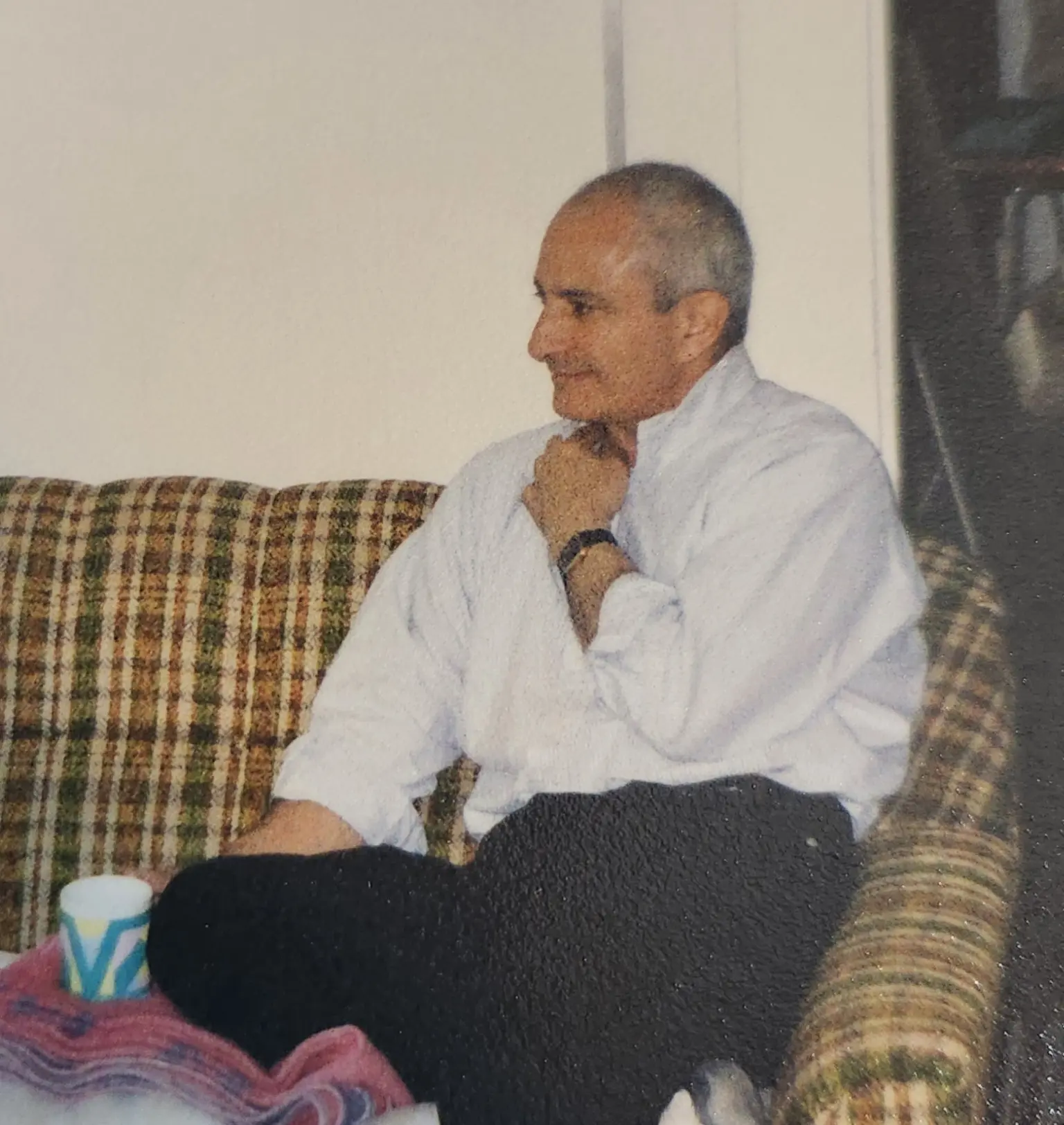
Drawn by the grace of Bhagavan in the early 1990s, he moved from Montreal to live near Arunachala Ashrama in Nova Scotia. He was a dear friend who remained intimately connected with Bhagavan and the Ashrama to the end of his life.
After arriving in Nova Scotia, he lived in the Ashrama for a few years before purchasing a home near Greenwood, 20 miles away, where he worked as a social worker, employed by the Canadian Government at the Greenwood Armed Forces Base.
Joe made many trips to Tiruvannamalai after connecting with Bhagavan and while living in the Ashrama in Nova Scotia he took up remodelling projects in the main house. His dedicated handiwork is still utilized and appreciated to this day.
In his younger days, Joe lived in a Franciscan monastery for some years and always revered the teachings of Christ. He was a poet too and expressed his life and yearnings in two publications: 'Shadows I Have Seen' & 'Reality’s Fragility'.
His remains are interred in the graveyard of the Hermitage of the Annunciation, an Eastern Orthodox monastery in New Germany, Nova Scotia.
Joe was a gentle and kind soul, and his presence will be missed.