

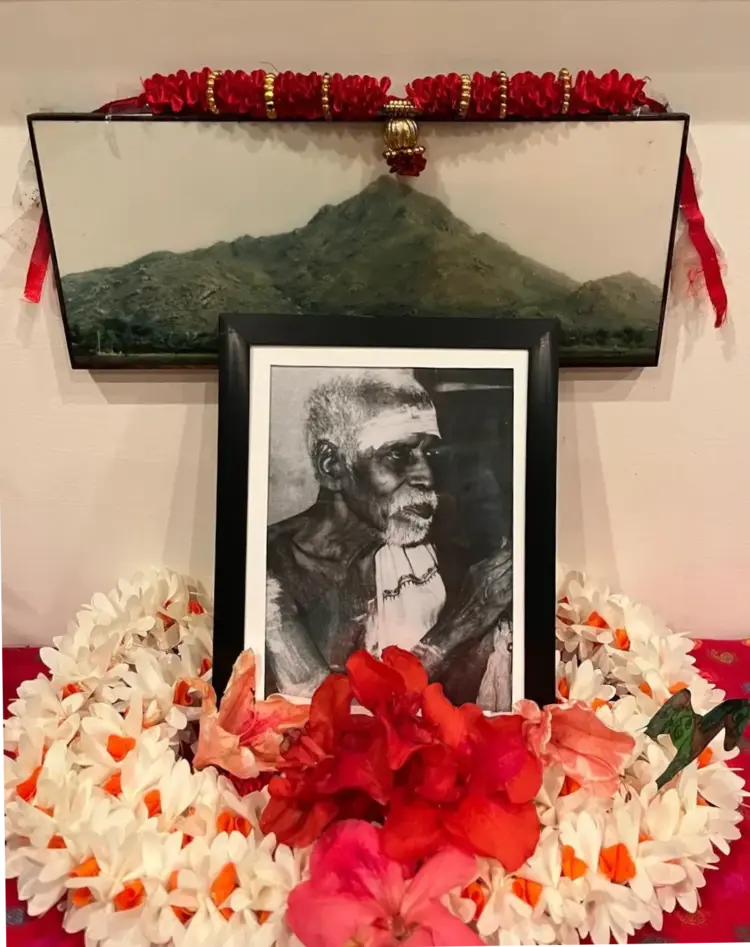
Venkatesa Śāstṛi
Alanta,GA Satsang, Oct 2026
In Upadesa Saram, verse 9, Bhagavan says that sublimating the ego with intense love is the highest form of devotion. When one dwells on the spiritual journey of Venkatesa Śāstṛi one cannot help but marvel at the sanctity of that teaching.
Venkatesa Śāstṛi is a distant relative in the maternal lineage of Bhagavan Ramana Maharshi. He lost his mother when he was very young and his stepmother, unable to control her temper, was not very kind to him. Venkatesa Śāstṛi’s father enrolled him in a residential Ayurvedic Vedic school in Kerala. Besides Ayurveda, the school offered lessons in many other aspects of the Vedas including astrology. Venkatesa was a brilliant student with a keen intellect and mastered material in one year that many students would take at least a decade to master. The mentor at the school, who belonged to the royal family of Kochi, was an excellent Ayurvedic doctor and quite accomplished in Astrology. Noticing the brilliance of this young student, he took Venkatesa under his wing and brought him to the Royal palace to continue his education.
He soon realized that Venkatesa Śāstṛi was not only excelling in Astrology, but was also particularly adept in “Prashna” astrology. Unlike ordinary astrology which is a complex grid of mathematical calculations based on planetary positions, birth time, place etc, prashna delves into an intuitive realm that can be achieved only through Self-attention. It is pretty much a special talent akin to a siddhi. So unique is that qualification that they can reliably forecast events, retrace events and predict outcomes with very minimal information. These abilities were highly sought after and were lucratively marketable. When he completed his education, his teacher was so proud of him. Venkatesa was too poor to pay him a proper monetary guru dakshina and his guru was aware of it. Instead, he gave Venkatesa a picture of Lord Subramania, the second son of Lord Shiva. Placing the picture in his hand, the teacher said "Be wholeheartedly devoted to Subramania; that is your Guru-dakshina to me".
Venkatesa did exactly that. He went back to his village, led a life of utter piety and soon became a renowned astrologer.
One day, one of his uncles brought him a picture of Bhagavan Ramana Maharshi. Venkatesa Śāstṛi placed the picture with great reverence next to the picture of Subramania that his teacher had given him in his puja room. One day when he opened his eyes after meditating in his puja room, he saw Bhagavan transforming into Lord Subramania and Lord Subramania turning into Bhagavan. Baffled by that he stayed spellbound for nearly half an hour. He felt his teacher wanted him to meet this Lord Subramania in the human form and so decided to go to Tiruvannamalai in 1917. His life was about to shift gears...
That year, Bhagavan was in Skandashram and Alagammal was also living there. As soon as Venkatesa Śāstṛi introduced himself, Alagammal recognized him as her distant relative’s son. Even Bhagavan remembered quickly his family connection. Like many before and after him, Venkatesa Śāstṛi realized that he had found his Lord and Guru - the Lord of renunciation, wisdom, and silence, even before the first syllable passed between them. He was completely fascinated by the divine peace that he experienced in the silent presence of Bhagavan which drew him inward.
Back in Kochi, his career had just begun to thrive. His unique ability to delve into the sought after and highest form of astrology was bringing him name and fame and prosperity. Suddenly that did not seem to matter much. Conflicted by his situation, he mustered the courage to ask Bhagavan, “Isn’t Prashna branch of astrology the most accurate and highest form of science?” Bhagavan looked at him sincerely and said, “The science of Self is superior to all other sciences”.
Hearing this, the urge to renounce and serve at the feet of Bhagavan welled up within him. He asked Alagammal if he should act on that thought. Alagammal replied quickly that he should proceed back to his village and get married to the girl that was chosen for him even as a child and keep up the family’s promise to the girl’s parents. He took this motherly advice to heart as if he had heard his own mother’s voice and proceeded to his village. He got married to Viśālākṣī[1] and they lived in Kochi where he practiced his art and made a prosperous living. Soon the couple was blessed with a son.[2]
As was the custom, Venkatesa Śāstṛi cast his son’s horoscope based on his stars and planetary alignment. Much to his dismay he found that his son was not going to live past his teen years. He further realized that he and Viśālākṣī would have no other progeny. Knowing that destiny, he could barely enjoy the birth of the child. He was too devastated to share this with his wife and after a few months he visited Bhagavan. By this time Alagammal had attained nirvana and Bhagavan was residing in the ashram at the foot of the hill. Venkatesa Śāstṛi’s son Bala is a few years older than former ashram president Sri V.Sundara Ramanan. So, he must have been born around 1932. Venkatesa Śāstṛi accompanied Bhagavan as he was walking up thehill and told him about his son’s horoscope and the prediction of early death. He desperately sought Bhagavan’s Grace to intervene and change that destiny.
Bhagavan gave a metaphorical reply using the typical harvesting experience of a jackfruit tree since Venkatesa Śāstṛi had lived a good bit of his life in Kerala where this tree grows in abundance. Bhagavan pointed out that when ready, the jackfruit tree puts out multiple shoots, a few of them bear fruit and fewer among them attain maturity to bear fruit and that is natural. Not all shoots grow to that stage. Hearing that Venkatesa Śāstṛi got his answer.
He had approached Bhagavan to intervene and change destiny. Bhagavan’s answer helped him understand the importance of abidance and acceptance of the course of life. Still, the sting of the pain of utter helplessness was severe and he asked Bhagavan how to transcend that pain, and Bhagavan quoted the lines composed during his Virupaksha days “Hridaya guhara madhye...”. Hearing Bhagavan recite that, Venkatesa Śāstṛi had a paradigm shift in his outlook. He was going to bear the destiny at the feet of his master for the rest of his life. He completely lost interest in any commercial fruit of his learned art. He went back to the village and expressed his desire to go away to Tiruvannamalai and live as a mendicant. He promised his wife, Viśālākṣī, that he would make arrangements in his village so that she and Bala would be provided for. Viśālākṣī would have none of that.
Viśālākṣī
There are two 'Viśālākṣī's in Bhagavan’s lore that come to mind. One is Kavyakanta Ganapati Muni’s wife - she was the one who asked the quintessential question in Chapter 13 of Sri Ramana Gita that laid the foundation for our Matrubhuteshwarar temple.
The second Viśālākṣī is the wife of Sri Jagadīswara Śāstṛi who stood by his side through thick and thin. Both these women lived a life that exemplifies “Rishi patni” literally meaning “partner in penance”. This Viśālākṣī was no different. She adamantly opposed the idea of staying behind. Knowing fully well that the path her husband has chosen would keep them in penury, she requested her brother to raise her son as his own and left the village with her husband to live in Tiruvannamalai.
By the time they came Sri Niranjanananda the ashram sarvadhikari, and his son, Venkatoo who was raising his family, were serving the ashram. Since Venkatesa Śāstṛi was well versed in Vedic rituals, Niranjanananda Swami encouraged him to serve the fledgling temple shrine and Viśālākṣī could be helpful with domestic chores etc. He was not aware of the stinging grief that was the cause of Venkatesa Śāstṛi’s decision to move to Tiruvannamalai. When Bhagavan heard of the plan, he sternly told Venkatesa Śāstṛi to not forget the purpose of his move to Tiruvannamalai. Taking the cue, the couple took up residence in the village of Adi Annamalai.
The two would wake up early in the morning and walk to the ashram by going around Arunachala, spend the entire day in Bhagavan’s presence and walk right back to their home which was literally a mere shelter from the elements. With no vessels to cook, they lived off the generosity of the people of the town and led the life of mendicants. Before long, his prowess in the art of astrology became known, and his Vedic knowledge gained recognition. There are a few anecdotes that reflect his astrological prowess.
Once when he was performing his morning puja, a wealthy gentleman came with a question. When Viśālākṣī came to announce the arrival of the visitor, Śāstṛi told her to convey the message that the gold chain that he thinks he has lost is actually by the clothes washing stone at home and also that he should not, without proof, level blame on others. The gentleman was absolutely stunned because he had come precisely with that problem and went home sheepishly. Śāstṛi’s knowledge of Sanskrit, different aspects of Vedas and the couple’s gregarious nature made them rather popular in the remote town. So much so that in his later years, he was often referred to as Adi Annamalai Śāstṛigal. Viśālākṣī’s brother would bring their son Bala to visit every 3 years or so.
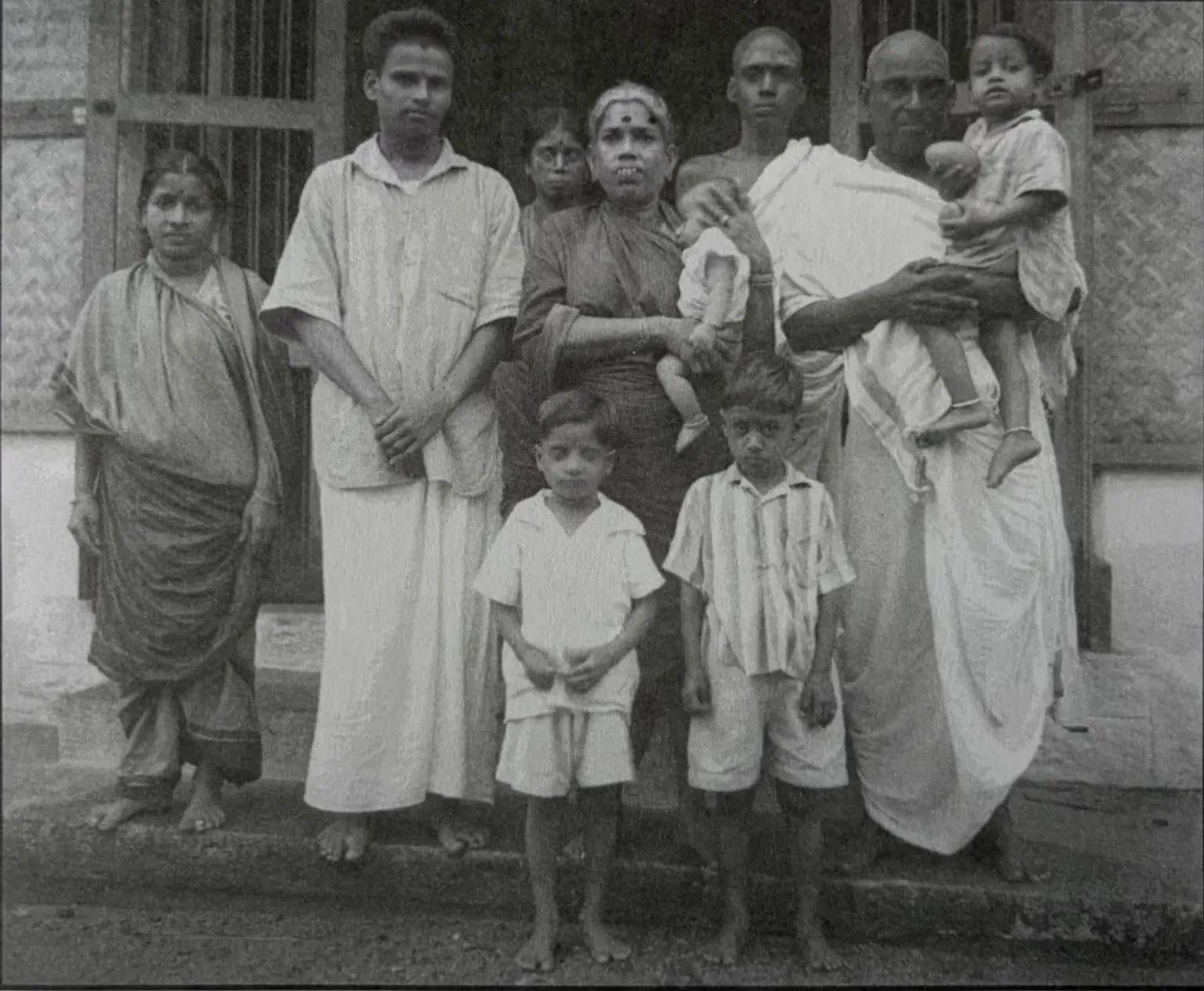
Venkatesa family with former president, Sri T.N.Venkataraman’s family along with Alamelu and her husband Pichu Iyer holding Ganesan with Sundaram and Bala standing in front. Viśālākṣī was kept oblivious of the impending destiny of her son until the very end. When the inevitable came to pass, Viśālākṣī was so much in tune with Bhagavan’s teaching that she accepted it as His will and bore the grief with great dignity.
Whenever Bhagavan wanted an explanation of some Vedic verse, if Jagadīsa Sastri or Kavyakanta were not around, he would ask Venkatesa Sastri and the latter would give beautiful answers, sometimes in succinct Sanskrit verse. Once Bhagavan asked him if his wife, Viśālākṣī, was able to understand some of these intricate Sanskrit verses since she was not conventionally educated. When Venkatesa Sastri replied that Viśālākṣī did not have the literary knowledge to grasp the Sanskrit verses, Bhagavan suggested that he should write some verses in simple Tamiḷ so that she can also partake in his knowledge. With that encouragement he composed quite a few simple verses in Tamiḷ. There are instances quoted ini Day by Day, where Bhagavan is noted to be reading some of his Tamiḷ compositions. Unfortunately most of them are lost.
The following verse, one of a series for each month of the Tamil calendar celebrates Margaḷi (Dec-Jan) the birth month of Bhagavan.
மார்கழி மாதம் பகவான் திருநாள் வரப்போகிறதய்யே ஓர்மனதுடன் எல்லோரும் கூடியே யேத்துவோம் ரமணனையே தலையே வணங்கிடு தேசிக ரமணனை தோன்றிடும் விடுதலையே கண்ணே பார்த்திடு குருமணி ரமணனை குன்றிடுமிடு கண்ணே காதே ரமணரின் கனி மொழி கேளு கவலைகள் இருக்காதே கரமே குவிந்திடு கருணை கடலை காரியம் சுபகரமே காலே அருணையை நாடி நடப்பாய் கழலுமே முக்காலே மதியே ரமணனை பதித்திடுவுன்னுள் அதுவே வெகுமதியே தேஹமே நீயும் தேசிகர் பணி நில் தத்வம் ஸந்தேகமிலை அறிவே நீயவன் ஒன்றாவதினால் அவனே நானென்று அறி குருவே உணர்வினுளுருவே அறிவக மனமேயுலகுருவே எங்குமங்கிங்கு மியங்கும் குருவைநாம் உள்ளினுள் பதித்திடவே.
- The auspicious day of Bhagavan is approaching in the month of Margaḷi,
- Folks, let us all together hail our beautiful Master!
- Oh head! Bow down to our leader Ramana...and you will be free.
- Oh eyes! Behold the munificent Ramana, all obstacles will diminish.
- Oh ears! Listen to His sweet voice, you will have no worries.
- Oh hands! Fold and pray to the ocean of Grace, only good deeds will happen through them.
- Oh feet! Proceed toward Arunachala, you will be relieved of all karmas past, present and future.
- Oh Intellect! Place Bhagavan inside you, that is the best gift you can ever get.
- Oh body! Stand at His beck and call, all doubts will dissipate.
- Oh mind! Understand that you are one with Him and therefore He and you are one and the same.
- Guru is the inner voice and the residing conscience within you; The one who is all around and within you, dwell on Him and abide in Him.
Weekly chant - வாரத்துதி
Sunday -
ஞாயிறு
அரிவிற்கரிவை அரிவாம் அருணகிரியிற் குருவாய் ஒளிர்ந்து
ஈர்த்தாண்ட எம்மான் ரமணனடி ஏத்துதற்கு
மார்த்தாண்ட வாரமது காண்
Hail the enlightened Ramana Guru who, residing in Arunachala, which is the bestower of profound wisdom, pulls us unto Him.
Monday - Blessed is the day (Monday) to hail the son of Shiva (who wears the moon and Ganga in his locks)
residing in the auspicious mountain of Arunachala.
Tuesday - Hail the One (on Tuesday) who burns all our karmas, in His fire of knowledge and infuses the elixir of immortality onto our tongue - on this very day seek Him who lights the world.
Wednesday - Hail Him who appears in the limitless form and as we behold Him, may our limitless thoughts subside and, on this Wednesday, attain peace!
Thursday - Hail our Guru (on Thursday) that has enhanced the sanctity of this holy Arunachala which is praised by all the demigods where the holy trio abide as the Silence and where our Guru who had attained the immortality of Self while still embodied resides!
Friday - Hail the one who resides in the pure heart and sees everyone as equal in the supreme state of Self. Enjoy the bliss that He bestows on this Friday
Saturday - Removing the karmic darkness through His expansive light, He shows how seeking just a tiny (size of a sesame seed) amount of pleasure one gets entangled in enormous (giant palm sized) bondage, this Saturday hail Him and be happy!
Even though we had heard this chant many times, it was not until the day of satsang that we found out that it was Venkatesa Sastri who had written it.
Around 1948, the couple moved closer to the ashram and came to live permanently in Ramana Nagar. Venkatesa Sastri was absolutely thrilled to see the construction of the
Mother’s temple
at such a grand scale. He had a deep-rooted admiration for the sincerity of service provided by Bhagavan’s brother
Niranjananda Swami. He had a brilliant opportunity to show his appreciation.
The audio rendition of the vaara-stuthi by Venkatesa Sastri’s niece, Smt. Mangalam Kalyanam is attached.
In Day by Day on 10 Jan 1956, Devaraja Mudaliar mentions that Bhagavan read Venkatesa's 108 couplets of Tamiḷ poetry that had been composed in 1946. Om 02 Feb, Bhagawan spent an afternoon reading all the Sanskrit verses collected by Venkatesa Sastri from the Upanishads that are reflected in the Ribhu Gita. From these instances we understand that he was not only scholarly but also spent a whole lot of time in the ashram and with Bhagavan.
As the Maha kumbabhishekam of Matrubhuteshwarar temple came to fruition in 1949, his joy knew no bounds. He was particularly impressed by the integrity, sincerity and humility of Sri Niranjanananda Swami. This deep appreciation came out as a song made up of five verses in praise of Niranjanananda Swami. This is one of the few compositions that were published in the October 1987
Mountain Path.
Soon after the mahanirvana of Bhagavan, their son Balu, who had finished his education, started working at the district office in Tiruvannamalai. The couple got to spend a few months living with him and shortly thereafter, quite suddenly, he passed away.
After their son’s death, they started living in the Morvi compound right across from the ashram. Venkatesa Sastri aka Adi Annamalai sastrigal soon started serving at Bhagavan’s shrine and became an endearing figure to many devotees as Sastri-mama. He was often seen running errands for the younger priests. His spiritual stature was hidden behind his frail unassuming presence.
His astrological acumen was still very much alive and there continued to be anecdotes of devotees finding their lost baggage, jewelry etc. Those miracles did not distract him. In fact, he dissuaded anyone that would listen to not crave such talents.
In 1982, Viśālākṣī passed away. At the request of the ashram, Sastri-mama started living inside the ashram where he could be taken care of better.
As he aged, his eyesight started failing and he needed help to move about. There is an endearing picture of Sastri-mama being helped by Dr.Hugo Maier to enter the “Old Hall” after its refurbishment in December 1986. That perhaps is one of his final photographs.
In the final months of 1987, he sustained a hip fracture. Since he was too frail for any surgery, Dr.Hugo Maier doctored him conservatively.
The injury and the immobility were too much for the body to handle and on December 13th 1987, Venkatesa was absorbed in Arunachala.
In the October 1987 issue of
'Niranjana Panchakam
was published. The managing editor at the time was Sri V.Ganesan, Venkatesa Sastri’s nephew. Sri Ganesan had the good fortune of moving closely with him and Sri Ganesan’s documentation of his interactions with Sastri-mama is by far the greatest source of information that we could find on this devotee. The MP article was written by
Viswanatha Swami
who we believe was very close to both Viśālākṣī and Venkatesa Sastri and often took devotees to have his darshan. The subject of the article was Swami
Niranjananda, the person that Sastrigal admired deeply. Besides this article, the magazine serendipitously carried an introducing article on ashram workers. It starts with Sri Mani, noted to be one of the earliest ashram workers. His introduction ends with a comment that until recently he had been taking care of Adi Annamalai Sastrigal (Venkatesa Sastri). The timing of the publication is also so unusual because this possibly was the last Mountain Path that Sri Venkatesa Sastri would have seen since the very next one carried his obituary.
[1]
in Sri Lalita Sahasranam,
Viśālākṣī; verse 173
[2]
Here we see the play of Maya at its best. Venkatesa Śāstṛi, the renowned astrologer who could predict future events with ease from mere contemplation and calculation, lost his peace seeing the future of his son. His own knowledge put him through immense grief and suffering, which makes us appreciate the saying “Ignorance is bliss” in a new light.
செவ்வாய்
தீவிணையை தீய்க்கும் தீயான தேசிகன்தாள் நாவிற்கு நல்லமுது நல்குமே- பூவிற்கு புங்கா ரமணன்
புலங்கும் ரமணனை அங்காரக நாள் அடை
புதன்
எண்ணுருவாய் ஓங்கும் எம்மான் ரமணனை கண்ணுறுதல் காட்சியோடு எண்ணுதலும்
சௌம்யமனமுற்று சாந்தி பெறவே செய்யும் சௌம்யதினம் அன்றேசார்
விழாழன்
தேவர் துதிக்கும் திருவருணை ஏற்
றம்உற
மூவர்மதிக் கொணா மோனத்தால் மேவும்
உருவத்துடன் முக்தி பெற்ற குருவை
குருவாரம் கூறு
வெள்ளி
அமனமனருள் அமரும் அமலன் சமனமாம் தன்னிலையை சார்ந்தோன் ரமணன்தான்
அள்ளி அளித்துள்ள ஆனந்தமே பருக வெள்ளிகிழமையே மேல்
சனி
வினையிருள் நீக்க விரிகதிரால் எம்மான் தினை அளவாம் இன்பம் அளித்து பனை அளவு பந்தம் பரிக்கும் பரமனைப் பற்றியே
மந்தன் கிழமை மகிழ்
-- TBD --
niranjana-panchakam

Citations
 Shastri-mama, far-right, at Bhagavan's shrine