

Excerpts from Upadesa Ratnavali
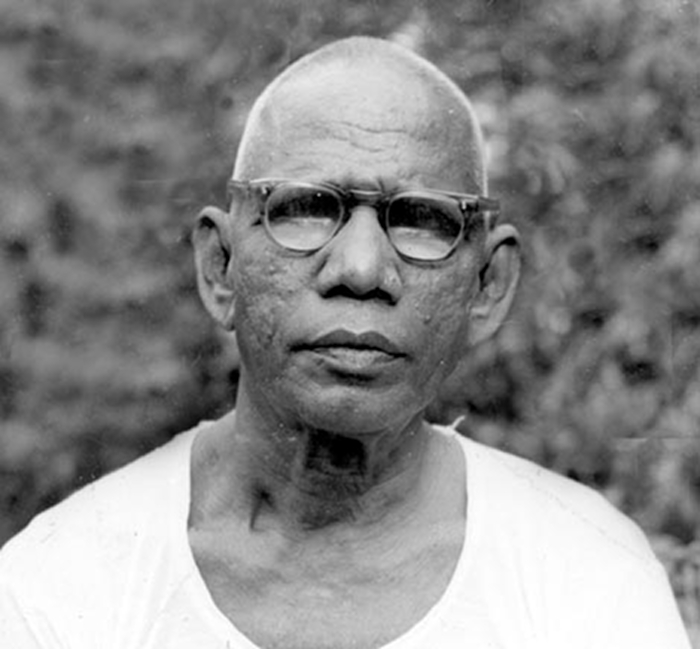
Sadhu Natanananda, while listening to the questions of devotees, and hearing Sri Bhagavan's replies, wished to preserve these gems and present them to Tamiḷ devotees in a simple, concise manner.
Hence, the prose work Upadesa Ratnavali came into being in 1931.
Sri Hari Moorthy has lovingly translated this work from the original Tamiḷ, and his translation and commentary has been published[1] this year by Sri Ramanasramam. The first excerpts from Upadesa Ratnavali were published in the March/April 2025 issue of
'The Maharshi'. We are pleased to present another selection of these inspired aphorisms.9. Embracing Humility: A Path to Greatness
அவதாரிகை: அடக்கமே உயர்வுக்குக் காரணமெனல்
Summary: Humility is the quintessence of greatness.
Humility is indispensable for achieving greatness. The emergence of humility necessitates the disappearance of the ego. Even in the absence of conscious awareness, when the ego is prevented from asserting itself, the grace of Lord Ishvara flows freely. Such a state of being is indeed great. Why? Because humility represents the innate wisdom inherent in every jiva, a state of being that is universal. This natural state of wisdom, silently radiating as nondual effulgent consciousness, is hailed as the pinnacle of greatness. Conversely, when an individual deviates from this state of nondual awareness, identifying with the body and senses as the Self, misidentification ensues. This lack of Self awareness gives rise to various complexities and grandeur, leading to a state of illusion and suffering deemed the lowest of the low. Therefore, the absence of ego is considered the highest state, while its presence is regarded as the lowest. “The greatest among beings are those who do not seek greatness,’ proclaims the Vedas.”
– Sorupa Saram“When one adopts the egoic notion, ‘I am the body,’ troubles arise as the illusory world transforms into a reality, bringing forth abundant suffering. It is truly remarkable! Who can comprehend this intricate play?”
– ThayumanavarCommentary: By citing two poignant verses, the author elucidates two pivotal points: the egoic sense leads to trouble and misery, and the egoless state brings forth the bliss of the Self. Drawing from these insights and a widely accepted understanding that humility arises from the absence of ego, the author concludes that humility is indeed the genuine source of greatness.

10. In the Midst of Divine Grace: The Torment of Unquenched Desires
அவதாரிகை: அருட்பிரவாகத்துக் கிடையிலிருந்தும் தாபத்ரய வெப்பந் தணியாதது, நதிப்பிரவாகத்துக்கிடையிலிருந்தும் தாக வேட்கை தணியாததற்கு ஒக்குமெனல்.
Remaining in the midst of a flood of divine grace without relinquishing one's pursuit of worldly desires is akin to being stranded in the middle of a river, tormented by unquenched thirst.
Explanation: Just as the four elements – earth, fire, water, and air – exist within the canvas of the fifth element, space, all jivas reside within the infinite expanse of the Self's perfect grace, which permeates everywhere like boundless knowledge. When one fails to dwell in this wisdom and experience its bliss, transcending the distinction between inner and outer, by continuing to grapple with worldly pursuits, it is akin to standing in a river with rushing waters and still suffering from thirst. “Without recognizing oneself, searching for oneself is peculiar. How can one even describe such an occurrence? It's akin to standing in the middle of a river and still crying out for water while being thirsty.”
Commentary: This verse brilliantly brings out the paradoxical nature of the human quest for Self realization, suggesting that, without seeking one's own identity, any other pursuit becomes absurd and futile. The analogy of standing in the middle of a river and still thirsting for water vividly illustrates this irony. Just as it is nonsensical to search for water while surrounded by it, it is equally absurd to seek one's Self looking outward. The author emphasizes the need to look inward and cultivate a deep understanding of oneself. All other pursuits only create worldly misery as described in section 9.
11. The Futility of Seeking Lord Ishwara Externally
அவதாரிகை: உள்ளத்தின் கண்ணறியாது ஈச்வரனை வெளியிற்றேடித் திரிதல் வ்யர்த்தமே யெனல்.
Summary: Searching for Lord Ishvara without delving into one's own heart is futile
Explanation: Shining within every heart as pure existence (Sat), Lord Ishvara is ever present, awaiting realization by those who turn their focus inward with unwavering concentration. Those who seek externally only diminish themselves by wandering aimlessly. Why? There is no purpose in such wandering. Why? How can something be found in a place other than where it inherently resides? In the heart, he shines as Self-luminous, formless, and undifferentiated wisdom eternally. Attempting to perceive him as an external object separate from oneself is futile. Even after searching for countless eons, one would find no success in such an external quest.
“The hierarchy of existence can be understood as follows: The lowest level entails perceiving a separation between oneself and Lord Ishvara.
The intermediate level involves constantly contemplating Lord Ishvara's divine feet.
The highest level of existence is achieved when one realizes the inherent unity between oneself and Lord Ishvara.”
– Shiva Jnana Vallalar
“Yearning to behold the Lord, you kindle a camphor flame and engage in rituals, worshiping with fervor by bringing your hands together. But whom do you seek – the cherished Self or some other entity? Those who anticipate discovering the divine Lord in corporeal form are, in truth, deluding themselves.”
Commentary: Drawing from two poignant verses, the author articulates a compelling discourse on the fruitlessness of seeking the Lord externally. Emphasizing that the Lord perpetually radiates as the eternal Self within every heart, ceaselessly bestowing His grace, Sri Natanananda underscores the pinnacle of existence: the realization of unity between the individual and the divine, as asserted in the first verse by Shiva Jnana Vallalar, a distinguished 15th-century poet-philosopher. The second verse poignantly illustrates the futility of ritualistic prayers founded on the belief that the Lord manifests in a specific form, as, in truth, he shines ubiquitously as unmanifested wisdom.
12. The Unified Essence of Peace and Shakti
அவதாரிகை: சாந்தி சக்திகளை வெவ்வேறெனல் பிரமாதமாம் எனல்.
Summary: Stating that inner peace and manifested shaktis (power) are two distinct entities is erroneous.
Explanation: Sages with philosophical insight assert that peace and shaktis are synonymous. Why? This assertion is rooted in the understanding that consciousness itself transforms into knowledge. Thus, the tranquility experienced internally is mirrored in the external manifestation of shaktis. Essentially, the latent potential of Lord Ishvara, unbound by causality or limitations, resides as peace. When it unfolds from His undifferentiated Self, it manifests as shaktis.
13. The Illusion of Lord Ishvara's Omnipresent Shaktis
அவதாரிகை: ஈஸ்வரனுக் குள்ளனவாகச் சொல்லப்படும் ஸர்வக்ஞத்வ மாதிய சக்திகள் சொன்மாத் திரமே யெனல்
Summary: Describing Lord Ishvara as possessing omnipresent shaktis is deceptive.
Explanation: Describing Lord Ishvara as possessing omnipresent shaktis is a figment of our imagination. Why? Lord Ishvara radiates as luminous consciousness, existence, bliss, and undividedness. How could he be said to possess specific and limited powers when his essence transcends such definitions? If these shaktis cannot be attributed to him as possessions, how could we then attribute omnipresent shaktis to him? In truth, such attributions contradict the perfect non-dual nature of Lord Shiva's existence. Therefore, they hold no relevance to truth. When the Vedas speak of Lord Ishvara possessing infinite shaktis, they do so as a counterargument (Purva Paksham). This is because beings steeped in ignorance, identifying themselves with the body, claim ownership of actions and their results. Burdened by this ignorance, they cycle through birth and death. Out of compassion for such beings, it is said that Lord Ishvara possesses all these shaktis.
14. The Fallacy of Manifested Shaktis
அவதாரிகை: ஸர்வக்ஞத்வமாதிய சக்திகள் அஞ்ஞானிகள் வரையுமே மெய்போலத் தோற்றுமெனல்
Summary: Only the unwise perceive the all-encompassing manifested shaktis as the ultimate truth.
Explanation: Without being aware of the ever-present Self, which cognizes everything, only the unwise perceive the manifested scenes of the mind's forms and its illusory activities as real. Consequently, they consider omnipresent shaktis to be real. Conversely, Jnanis, who have realized the truth and are completely rid of the dark and delusory desires of the mind, understand differently. Why? The illusory actions of maya, which bring forth and destroy material things, are borne out of the one constant and indestructible Self. Acting as an agent, one can become entangled in the material world through desires. Such desires create miseries. Jnanis clearly perceive this reality. Therefore, realizing the Self, a Jnani does not fall for material objects even in the slightest. Realizing the singular Self – which shines perpetually as consciousness-existence and manifests all forms and desirable objects – is the only path that allows one to be rid of all manifested shaktis. Why? Because the Self, shining in its radiance as existence, transcends all externally manifested shaktis in its infinite wisdom.
“All siddhis experienced by sages may provide pleasurable experiences, but they do not grant liberation.”
Commentary: The author wonderfully highlights a crucial distinction between siddhis, or supernatural powers, and liberation or spiritual freedom. Siddhis are extraordinary abilities, or powers, that spiritual practitioners may attain through intense spiritual practices. These siddhis can manifest in various forms, including psychic abilities, healing powers, or control over the elements.
While siddhis may grant pleasurable experiences temporarily and enable practitioners to perform remarkable feats, they do not lead to true liberation or spiritual enlightenment. Liberation, in the spiritual sense, refers to the ultimate freedom from the cycle of birth and death (samsara) and the realization of one's true nature as pure consciousness, or the divine Self.
Building this theme over the last few sections, Sri Natanananda suggests that while siddhis may offer temporary satisfaction or worldly achievements, they ultimately do not lead to the inner transformation of the individual ego necessary for liberation. True liberation comes from transcending the egoic self, realizing one's unity with the divine or the cosmic consciousness, and experiencing a state of inner peace, wisdom, and unconditional love.
15. Manifested Shaktis Hinder Spiritual Progress
அவதாரிகை: ஸர்வக்ஞத்வமாதிய சித்திகள் ஹ்ருதயத்திலுள்ள வாசனைகள் மேன்மேலும் வளர்தற்கே ஹேதுவாமெனல்
Summary: All forms of siddhis (supernatural powers) only serve to cultivate vasanas, which are karmic imprints that manifest as desires in one's heart.
Explanation: All relationships stemming from actions, particularly those fueled by feeble powers, foster attachments among those who lack Self-awareness and are easily swayed. When such unwise beings gain supernatural powers, their minds become more externally oriented, leading to further entanglement. Although these actions may initially appear pleasurable, they ultimately lead to misery. The pleasures derived from external activities cannot culminate in liberation, as true liberation is the outcome of an inward journey.
Commentary: Expanding on the theme introduced in the previous section, where it was established that the wise do not seek supernatural powers (siddhis), the author delves deeper into the obstacles posed by these siddhis on the spiritual journey of aspirants. Instead of leading to genuine happiness, siddhis divert individuals from the spiritual path, pushing them towards external actions that generate further bondage and desires. Individuals gain misery from the limited powers granted to them by the Lord. If additional supernatural powers are granted to individuals whose attention is externally oriented, then only greater miseries befall them. Those who are already abiding in the inner bliss of the Self find no use for supernatural powers. Therefore, Sadhu Natanananda concludes that there is no reason to gain or seek supernatural powers over the absolute bliss of the Self, which is liberation.
16. Meaning of Omniscience
அவதாரிகை: எல்லாவற்றையுமறியும் ஆன்மாவையறிவதே ஸர்வக்ஞத்வ மென்பதன் பொருளாமெனல்
Summary: The essence of omniscience is to comprehend the atma (the Self), which is aware of everything.
Explanation: There is no world devoid of an object, space, or time. Similarly, there exists no object, space, or time without the presence of the atma. All phenomena, in all places and at all times, are perceived solely through the radiant essence of the atma. Hence, true omniscience lies in the awareness of the atma.
Commentary: This section explains the interplay between the world, the ego, and consciousness. It suggests that the world we perceive is inseparable from the concepts of objects, space, and time. These elements are fundamental to our experience of external reality. However, underlying this apparent diversity and multiplicity is the unifying presence of the atma, or the Self.
Sri Natanananda highlights the interconnectedness of all things, asserting that objects, space, and time are not independent entities but, rather, are manifestations of the atma. This perspective shifts the focus from external phenomena to the underlying essence that permeates everything. Furthermore, he emphasizes the role of consciousness in the perception of reality, suggesting that all phenomena are perceived through the radiant essence of the atma and implying that consciousness is the medium through which the world is experienced.
Finally, his explanation posits that true omniscience, or complete knowledge, arises only from awareness of the atma.
The world is made up of the five kinds of sense perceptions and nothing else. And those perceptions are felt as objects by the five senses. Since through the senses the mind alone perceives the world, is the world other than the mind?
— Forty Verses on Reality, verse 6Kailash Kora – 2025
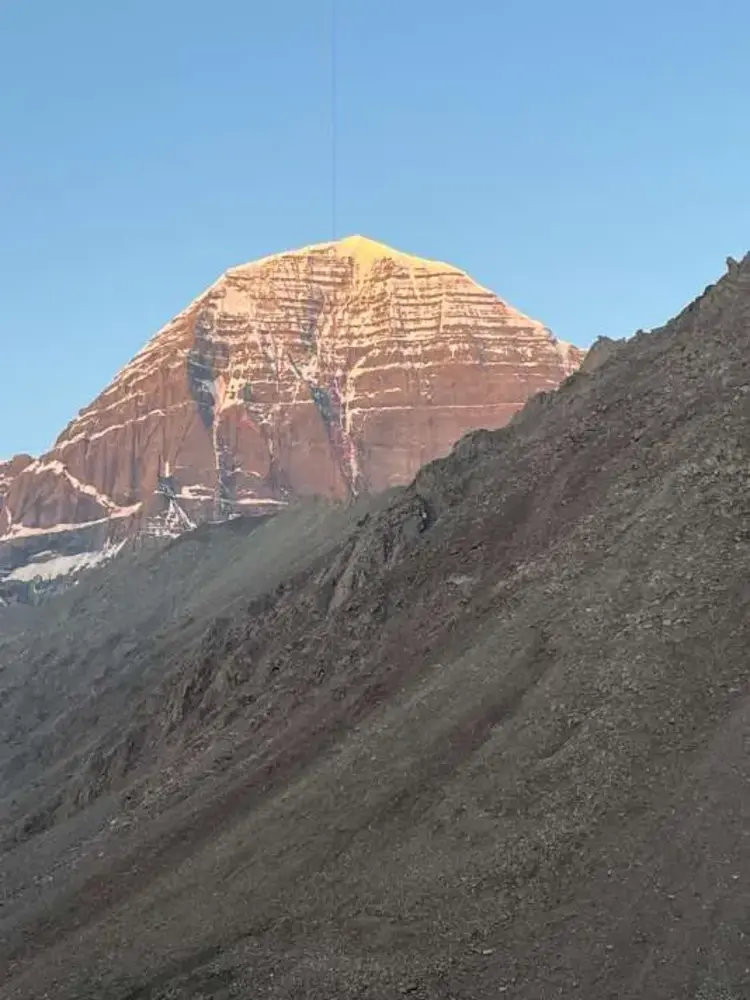
On June 6, 2025, an inspired group of Sri Bhagavan's devotees, including Shridhar and Nimmi Bharadawaj, Lavanya Hari, Ranjani Ramanan, Sangeetha Swaminathan and Swaminathan Venkataraman started on a pilgrimage to the holy mountain of Kailash, the abode of Siva himself. They completed the demanding 32mile circumambulation[2] reaching an altitude of 18,471 feet, with the name of Siva on their lips and Sri Bhagavan in their hearts. As a foretaste, Nimmi Bharadawaj has painted a beautiful picture in her poem, describing their unforgettable visit.
A divine mountain stands looming large;
we were trudging its valley completely in His charge;
Our bodies kept moving up step by step...
The Voice of Arunachala fueling our every step.
As we scaled up to the Dromla pass;
We beheld the breathtaking beauty of His abode at last!
Our throats were parched and nares dry...
we took in every whiff of air, our body had come to rely.
After a few deep breaths, we all felt fine,
standing atop the pass, enjoyed the warm sunshine!
Humbled by the devotion of the many natives we watched;
Their chanting and prostrations filled with Grace at large.
Prayer flags abound, incense burning on the ground;
Their deep voiced chant blend as one humming sound…
smiling bright faces beaming all around!
The joy of coming home felt real and profound!
Our bodies refreshed, felt lighter than air...
It had moved all along only by His Grace,
       lest we ever despair!
Down the pass and the undulating valley;
We marched cheerfully chanting His Glory.
Rested and relaxed, we finished the kora on day three,
with clear blue skies and sun shining brightly.
The hike around His abode had energized us fully;
We were amazed by the locals who bore their cross silently.
We headed to the lake that sprang from divine thoughts;
And got to sit and meditate in some of the holiest spots!
As we took leave of that hallowed ground, we felt clearly,
this pilgrimage had taken us all deeper internally.
Every mountain, lake, cave, and shrine,
lying deep within us begins to shine...
as the body begins to wears itself out,
the breath matures and resides in that One spot...
No movement, no noise,
we tune into that silent voice...
and in that profound inner poise
we rest and rejoice🙏
The 129th anniversary of
Bhagavan Sri
Ramana Maharshi’s Advent Arunachala.

Fifty years ago, this neglected one room schoolhouse, built in 1879, the year of Sri Ramana’s birth, became the first temple in the West dedicated to the Silent Sage of Arunachala. Please join us for the Golden Jubilee of the inauguration of this
Sri Arunachala Ramana Mandiram.
- at 11:00 AM on Sunday, August 31, 2025
- At the Arunachala Ashrama
- 1451 Clarence Road, Bridgetown, Nova Scotia
- We will have a presentation on the remarkable story of Sri Arunachala Ramana Mandiram’s inception and also celebrate Ramana Maharshi’s Advent Arunachala.
- Everyone please come and join us at this special event.
Bhagavan Sri Ramana Maharshi’s Advent at Arunachala
Will also be celebrated at the New York City
Arunachala Ashrama
on Sunday 7th September at 11:00AM
8606 Edgerton Blvd.
Jamaica Estates, Queens, NY 11432
You, your family and friends are cordially invited to join.
Remembering Sri T.S.Vaidyanathan
Over the last thirty five years, all those who have been drawn to Bhagavan Ramana’s Ashrama in New York and Nova Scotia, Canada, have benefited in one way or another by coming into contact with Sri Vaidyanathan. In his passing, we have lost an ever enthusiastic friend, a confidant, a supporter, a constant source of inspiration and devotional guide.
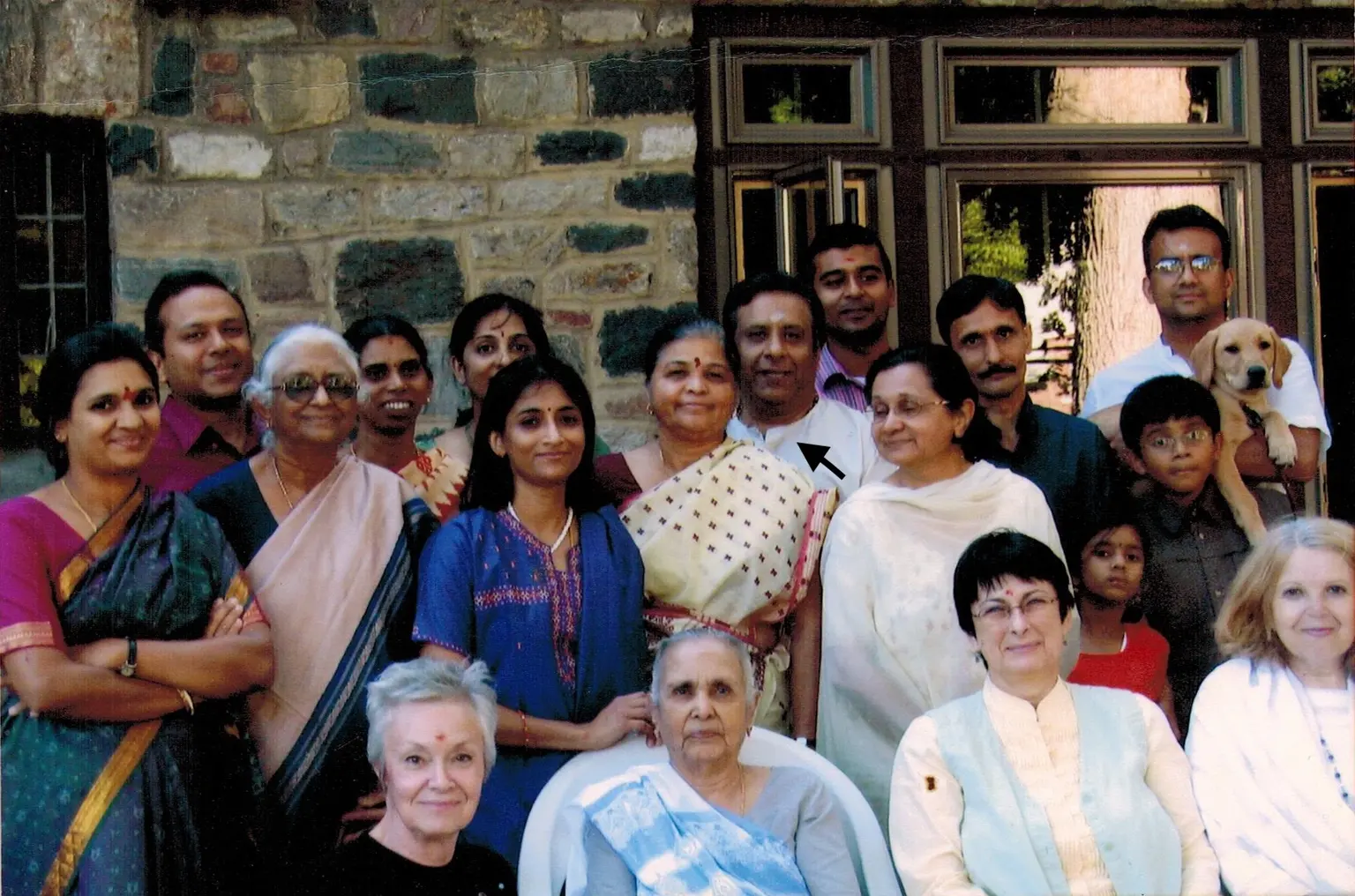
He first contacted Arunachala Ashrama in the late 1980s, requesting books and photos, and asking about devotees, Sri Ramanasramam and satsang groups around the country and in Canada. He held a PhD in aerospace engineering and was working in Seattle for Boeing Aerospace at the time. By the mid1990s, he shifted his residence to Queens in New York City, first living in the Ashrama before settling into a new job and residence. Since then, with sincere and guileless devotion, he actively assisted the Ashrama and served devotees in numerous ways. Even after he retired and moved back to India to serve Sri Ramanasramam in 2012, his service to Arunachala Ashrama and devotees here did not end.
The extreme dedication, enthusiasm, selfless service and sacrifices he made on behalf of the Ashrama and for any devotee in need of assistance was something wonderful to see. Siva was his God and the manifestation of Siva in the form of Bhagavan Sri Ramana Maharshi became his primary focus in life.
We have all read stories from the first book that sparked devotion in the heart of the young Venkataraman while he resided in his uncle’s home in Madurai. That extreme devotion and acts of total selfsurrender to Siva chronicled in the Periapuranam were, to our amazement, often replicated in many events throughout the life of our friend Sri T.S.Vaidyanathan. I will here mention just one instance.
When Arunachala Ashrama in New York City was in the process of purchasing a new, larger building in 2005, a final loan was needed to complete the transaction. Knowing about that need, Sri Vaidyanathan immediately went to his bank, took an equity loan on his house, got the required amount and gave it over to the Ashrama. He was so quick and decisive about it that henceforth we remained cautious about letting him know of any other major need of the Ashrama, for fear that he might sell his house, his car, everything, in his enthusiasm to serve his master and lord Arunachala Ramana. Such was the onepointed and unreserved love and devotion of this rare bhakta of Bhagavan.
We were informed that on May 14th, his journey in this world ended at the place where Siva lives and reigns, at the foot of the holy Arunachala Mountain. His devoted wife, Rakshaben, predeceased him five years earlier.
After reflecting on our long association with Sri Vaidyanathan, we now realize how fortunate we all were to experience the grace of Bhagavan, manifested to us in such a remarkable way in the life of this dear friend and devotee. There is no doubt that he was born to inspire others on the royal road to the Holy Hill of the Beacon Light. He will be sadly missed by all.
– DJH[1] Upadesa Ratnavali is available in the Ramana Maharshi Heritage Foundation's online bookstore
[2] Kora (tibetan) is the same as pradakṣiṇā, "circumambulation"; parikrama, "the path surrounding something"