

The Clearest of the Clear
Tennyson’s Experience of the Self, Part II
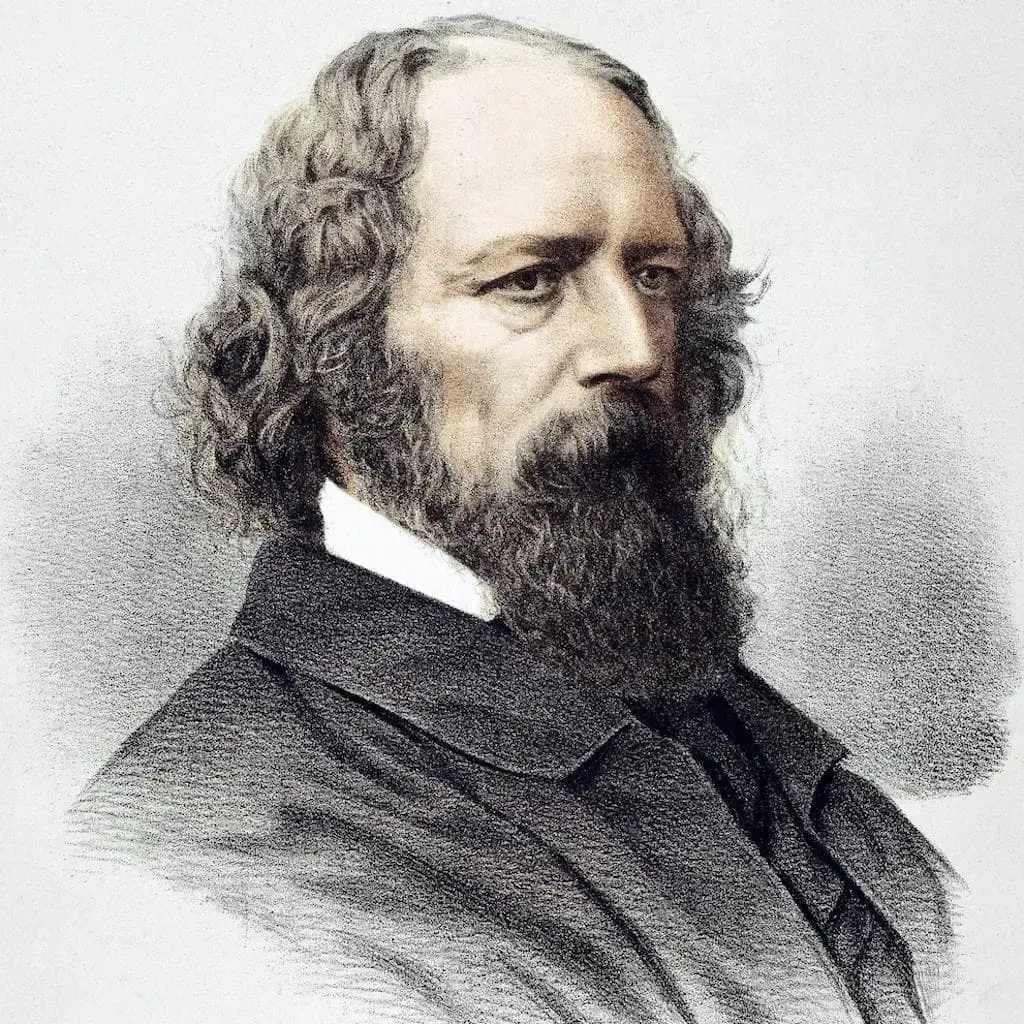
Alfred Lord Tennyson (1809 – Oct 6,1892) is usually remembered as a great poetic voice of Victorian England — a poet of faith and doubt, a man of moral earnestness struggling to reconcile religion with science. Yet beneath the public laureate lived a deeply inward soul — one who had repeated experiences of the infinite, natural state of the Self which influenced his entire life and his writings as well.
Alfred as 'I'
Although Tennyson speaks of “repeating my own name”, it is not clear here whether he literally said “Alfred” or the word “I”. The latter is a possibility since he speaks of “the consciousness of individuality” and that “the individuality itself seemed to dissolve”.
There is another reason to wonder about “Alfred” vs “I”. One of his most famous poems is The Ancient Sage, of which John Tyndall writes to Hallam, for the Memoir, as follows: “The ancient sage, who existed ‘a thousand summers ere the time of Christ,’ and is described as having ‘quitted’ his ancient city, followed by one who loved and honoured him, but who nevertheless was not his disciple. The younger man was “richly garb’d, but worn from wasteful living." He bore in his hand a scroll of verse. At the mouth of a cavern from which "an affluent fountain pour’d", the old man halted, turned and spoke: What hast thou there? Some death song for the Ghouls to make their banquet relish? The allusions to ‘wasteful living’ and ‘some death song for the Ghouls’ indicate clearly the light in which Tennyson viewed the younger man. His moral and religious fibre are gone, and in particular he has lost all belief in a life after death. He is, briefly, what we might call a materialist, and the object of the poet is to combat, through the mouth of the Sage, the errors of this view.
The poem is, throughout, a discussion between a believer in immortality and one who is unable to believe. The method pursued is this. The Sage reads a portion of the scroll, which he has taken from the hands of his follower, and then brings his own arguments to bear upon that portion, with a view to neutralising the scepticism of the younger man.
“Seven years after I had first read them, your father died, and you, his son, asked me to contribute a chapter to the book which you contemplate publishing. I knew that I had some small store of references to my interview with your father, carefully written in ancient journals. On the receipt of your request, I looked up the account of my first visit to Farringford, and there, to my profound astonishment, I found described that experience of your father’s which, in the mouth of the Ancient Sage, was made the ground of an important argument against materialism and in favour of personal immortality eight-and twenty years afterwards. In no other poem during all these years is, to my knowledge, this experience once alluded to. I had completely forgotten it, but here it was recorded in black and white. If you turn to your father’s account of the wonderful state of consciousness superinduced by thinking of his own name, and compare it with the argument of the Ancient Sage, you will see that they refer to one and the same phenomenon.”
And more, my son! for more than once when I
Sat all alone, revolving in myself
The word that is the symbol of myself,
The mortal limit of the Self was loosed,
And passed into the Nameless, as a cloud
The word that is the symbol of myself,
The mortal limit of the Self was loosed,
And passed into the Nameless, as a cloud
Melts into heaven. I touch’d my limbs, the limbs
Were strange not mine—and yet no shade of doubt,
But utter clearness, and thro’ loss of Self
The gain of such large life as match’d with ours
Were Sun to spark—unshadowable in words,
Themselves but shadows of a shadow-world.
Tennyson here refers to the “word that is the symbol of myself”. This seems more like it might in fact refer to “I”, compared to the earlier “repeating my own name” although one probably still cannot state that definitively. Tennyson seems keen to convey that the poem might refer to himself (and that he wasn’t merely quoting Lao Tzu, who Tennyson knew and admired). He footnoted the manuscript and ascribed the experience to himself: “This is also a personal experience which I have had more than once”. He also said elsewhere: “The whole poem is very personal. The passages about ‘Faith’ and the ‘Passion of the Past’ were more especially my own personal feelings”.
But there is yet another piece of evidence that, in my view, clinches the argument that Tennyson was indeed referring to the use of the pronoun “I” and not his name “Alfred”. As his son Hallam records in the Memoir: “He said again, with deep feeling, in January, 1869: ‘Yes, it is true there are moments when the flesh is nothing to me, when I feel and know the flesh to be the vision, God and the spiritual – the only real and true. Depend upon it, the spiritual is the real; it belongs to one more than the hand and the foot. You may tell me that my hand and my foot are only imaginary symbols of my existence. I could believe you, but you never, never can convince me that the I is not an eternal reality, and that the spiritual is not the true and real part of me.’ These words he spoke with such passionate earnestness that a solemn silence fell on us as he left the room”.
Here, Tennyson comes out and says explicitly “you never, never can convince me that the I is not an eternal reality...”. It is quite interesting, even remarkable, that Tennyson stumbled upon the use of the ‘I’ without any apparent eastern influence in childhood.
Religion, Belief and Unshakeable Knowing
Charles Darwin’s Origin of Species was published in 1859. It caused a great sensation and questioning of many religious beliefs. In 1869, Tennyson was a key driver behind the founding of the Metaphysical Society, whose object was that “those who were ranged on the side of faith should meet those who were ranged on the side of unfaith, and freely interchange their views”. Topics of faith and belief seem to have been a significant preoccupation for Tennyson. And while Tennyson continued to prize faith, it is also clear that it was different from the generic Christian orthodoxy of his time, rooted as it was in his experiences.
Friends and family observed that Tennyson had a deep and abiding certainty about immortality. He did not argue for it, nor did he attempt to convert others. When asked, he would simply say that his confidence came from experience, not reasoning. And his utterances sought to point to that reality beyond blind faith on the one hand, and pure intellectual reasoning on the other.
Hallan writes: “About ‘The Holy Grail’ my father said to me: “At twenty-four I meant to write an epic or a drama of King Arthur, and I thought that I should take twenty years about the work. They will now say that I have been forty years about it. ‘ The Holy Grail ’ is one of the most imaginative of my poems. I have expressed there my strong feeling as to the Reality of the Unseen. The end, when the king speaks of his work and of his visions it is intended to be the summing up of all in the highest note by the highest of human men. These three lines in Arthur’s speech are the (spiritually) central lines of the Idylls: In moments when he feels he cannot die, and knows himself as no vision to himself, nor the High God a vision. The general English view of God is as of an immeasurable clergyman; and some mistake the devil for God.”
Tennyson was not content with belief. He wanted certainty – and he found it, again and again, in moments of profound inward absorption. What distinguished Tennyson spiritually was not adherence to doctrine, but an insistence on direct knowing. Hallam, as well as friend and philosopher James Knowles, recall him saying “I do not want to believe; I want to know. Belief is a poor substitute when knowledge is possible.” and that “Creeds are good for those who need them, but they often stop where they should begin.” Another friend Edward FitzGerald described Tennyson in letters as deeply religious but impatient with argument, noting that he “felt things too deeply to care much for theology”.
This emphasis on experience and direct knowing led Tennyson to make a number of statements about various theological topics that may not have aligned with the religious orthodoxy of his time, but nevertheless strike an immediate chord for those familiar with Hindu philosophy.
On faith vs doubting
“I have never had any doubts about the existence of God. I do not believe in God; I know God. And if I were to be asked how I know, I should reply that I have felt Him.” And later, speaking of the effect of his experiences, he said: “iThe evidence is too strong for me. I cannot doubt.” But he preferred the removal of doubt through experience, not unquestioning faith He writes in his poem “In Memoriam”:
There lives more faith in honest doubt, Believe
me, than in half the creeds.
He fought his doubts and gather’d strength,
He would not make his judgment blind,
He faced the spectres of the mind
And laid them: thus he came at length To find a stronger faith his own;
And again in “The Ancient Sage”:
Thou canst not prove that thou art body alone,
Nor canst thou prove that thou art spirit alone,
Nor canst thou prove that thou art both in one,
Thou canst not prove thou art immortal, no,
Nor yet that thou art mortal – nay, my son,
Thou canst not prove that I, who speak with thee,
Am not thyself in converse with thyself,
For nothing worthy proving can be proven,
Nor yet disproven. Wherefore thou be wise,
Cleave ever to the sunnier side of doubt,
And cling to Faith beyond the forms of Faith!
She reels not in the storm of warring words,
She brightens at the clash of ‘Yes’ and ‘No,’
She sees the best that glimmers through the worst,
She feels the sun is hid but for a night,
She spies the summer through the winter bud,
She tastes the fruit before the blossom falls,
then hears the lark within the songless egg,
She finds the fountain where they wailed ‘Mirage!’
On freewill
Hallam writes in his Memoirs: “And he wrote for me as to man’s will being free but only within certain limits: ‘Man's free-will is but a bird in a cage; he can stop at the lower perch, or he can mount to a higher. Then that which is and knows will enlarge his cage, give him a higher and a higher perch, and at last break off the top of his cage, and let him out to be one with the free-will of the Universe.’”
On rebirth and eternal life
“If the absorption into the divine in the after-life be the creed of some, let them at all events allow us many existences of individuality before this absorption; since this short-lived individuality seems to be but too short a preparation for so mighty a union.”
Death’s truer name is ‘Onward,’ no discordance in the roll
And march of that Eternal Harmony
Whereto the worlds beat time.
“I can hardly understand,” he said, “how any great, imaginative man, who has deeply lived, suffered, thought and wrought, can doubt of the Soul’s continuous progress in the after-life.”
“Hast Thou made all this for naught! Is all this trouble of life worth undergoing if we only end in our own corpse-coffins at last? If you allow a God, and God allows this strong instinct and universal yearning for another life, surely that is in a measure a presumption of its truth. We cannot give up the mighty hopes that make us men.”
My own dim life should teach me this,
That life shall live for evermore,
Else earth is darkness at the core, And dust and ashes all that is.
What then were God to such as I?
Hallam continues: “I have heard him even say that he ‘would rather know that he was to be lost eternally than not know that the whole human race was to live eternally’; and when he speaks of ‘faintly trusting the larger hope,’ he means by ‘the larger hope’ that the whole human race would through, perhaps, ages of suffering, be at length purified and saved, even those who now ‘better not with time.”
He held undoubtingly the doctrine of a personal immortality, and was by no means content to accept our present existence as a mere preparation for the life of more perfect beings. He had once asked John Sterling whether he would be content with such an arrangement, and Sterling had replied that he would. I would, added Tennyson, emphatically; “I should consider that a liberty had been taken with me if I were made simply a means of ushering in something higher than myself.”
On the east vs west
“The philosophers of the East had a great fascination for my father, and he felt that the Western religion might learn from them much of spirituality. He was sure too that Western civilization had even in his time developed Eastern thought and morality ; but what direction the development would ultimately take, it was impossible to predict.”
An infant crying in the night
Ultimately, while Tennyson was blessed numerous times with the experience of the infinite and granted the certainty that those experiences were the truth, one gets the impression that he wasn’t permanently established in that state, by his own words.
Hallam writes in his Memoir: “Throughout his life he had a constant feeling of a spiritual harmony existing between ourselves and the outward visible Universe, and of the actual Immanence of God in the infinitesimal atom as in the vastest system. ‘If God,’ he would say, ‘were to withdraw Himself for one single instant from this Universe, everything would vanish into nothingness.’ When speaking on that subject he said to me: ‘My most passionate desire is to have a clearer and fuller vision of God. The soul seems to me one with God, how, I cannot tell. I can sympathize with God in my poor little way.’”
Similarly, the Duke of Argyll, in a moving tribute after Tennyson’s death in 1892, writes in a letter to Hallam: “The first words I heard him utter remain indelibly impressed upon my memory. On being introduced to him at an evening party in the house of Lord John Russell, I said, perhaps with some emotion, ‘I am so glad to know you.’ Not in the tone or voice of a mere conventional reply, but in the accents of sincere humility he answered, ‘You won’t find much in me — after all.’ The effect which these words produced upon me at the moment was deepened every time I saw him. Your father was a man of the noblest humility I have ever known. It was not that he was unconscious of his own powers. It was not that he was indifferent to the appreciation of them by others. But it was that he was far more continually conscious of the limitations upon them in face of those problems of the universe with which, in thought, he was habitually dealing. In his inner spirit he seemed to me to be always feeling his own later words:
“So runs my dream: But what am I?
An infant crying in the night:
An infant crying for the light:
And with no language but a cry.”

The 1901 publication of Cosmic Consciousness, authored by the Canadian Maurice Bucke, was, in the early days of the Ashram, a topic of discussion amongst devotees. A few references in Ashram publications relating to Tennyson and his spiritual experiences follow.
A Sadhu’s Reminiscences, by Major Chadwick
“Before I came to India I had read of such people as Edward Carpenter, Tennyson and many more who had had flashes of what they called ‘Cosmic Consciousness.’ I asked Bhagavan about this. Was it possible that once having gained Self-realization to lose it again? Certainly it was. To support this view Bhagavan took up a copy of Kaivalya Navanīta and told the interpreter to read a page of it to me. In the early stages of Sadhana this was quite possible and even probable. So long as the least desire or tie was left, a person would be pulled back again into the phenomenal world, he explained. After all it is only our Vasanas that prevent us from always being in our natural state, and Vasanas were not got rid of all of a sudden or by a flash of Cosmic Consciousness. One may have worked them out in a previous existence leaving a little to be done in the present life, but in any case they must first be destroyed.”
Day by Day with Bhagavan, by Devaraja Mudaliar 17 Jun 46
Later in the day G.V.S. said: “It is said that by repeating his own name a number of times Tennyson used to get into a state in which the world completely disappeared and he realised that it was all illusion.” And a discussion ensued as to where the quotation came from and whether we could find it. In continuation of yesterday’s conversation about Tennyson, the relevant passage was found in a footnote to the English translation of Upadesa Saram. It was not in a poem but in a letter to B.P.Blood. Bhagavan asked me to read it out, so I did : “....a kind of waking trance I have frequently had, quite up from boyhood, when I have been all alone. This has generally come upon me through repeating my own name two or three times to myself, silently, till all at once, as it were out of the intensity of consciousness of individuality, the individuality itself seemed to dissolve and fade away into boundless being : and this not a confused state but the clearest of the clearest, the surest of the surest, the weirdest of the weirdest, utterly beyond words, where death was an almost laughable impossibility, the loss of personality (if so it were) seeming no extinction but the only true life.”
Bhagavan said : “That state is called abidance in the Self. It is described in a number of songs.”
Sri Ramana Maharshi’s 130th Advent at Arunachala Anniversary
You, your family and friends are cordially invited to join us in
Arunachala Ashrama
1451 Clarence Road, Bridgetown, Nova Scotia BOS 1CO
11 a.m. Sunday 6th September
Arunachala Ashrama
8606 Edgerton Blvd.,Jamaica Estates, New York City 11432
11 a.m. Sunday 13th September
Death and Rebirth
To better understand and apply Sri Ramana’s teaching, S.S.Cohen listened attentively to the questions put to Bhagavan and his answers. He then went directly to his room and recorded them. He did this most frequently in 1936 and 1937, during his first year of residing in the Ashram. Later, for the benefit of seekers, he arranged these notes by subject and published them under the title of Guru Ramana, Memories and Notes. His notes and recollections remain even today some of the most insightful and inspiring observations of the life and teachings of the Master.
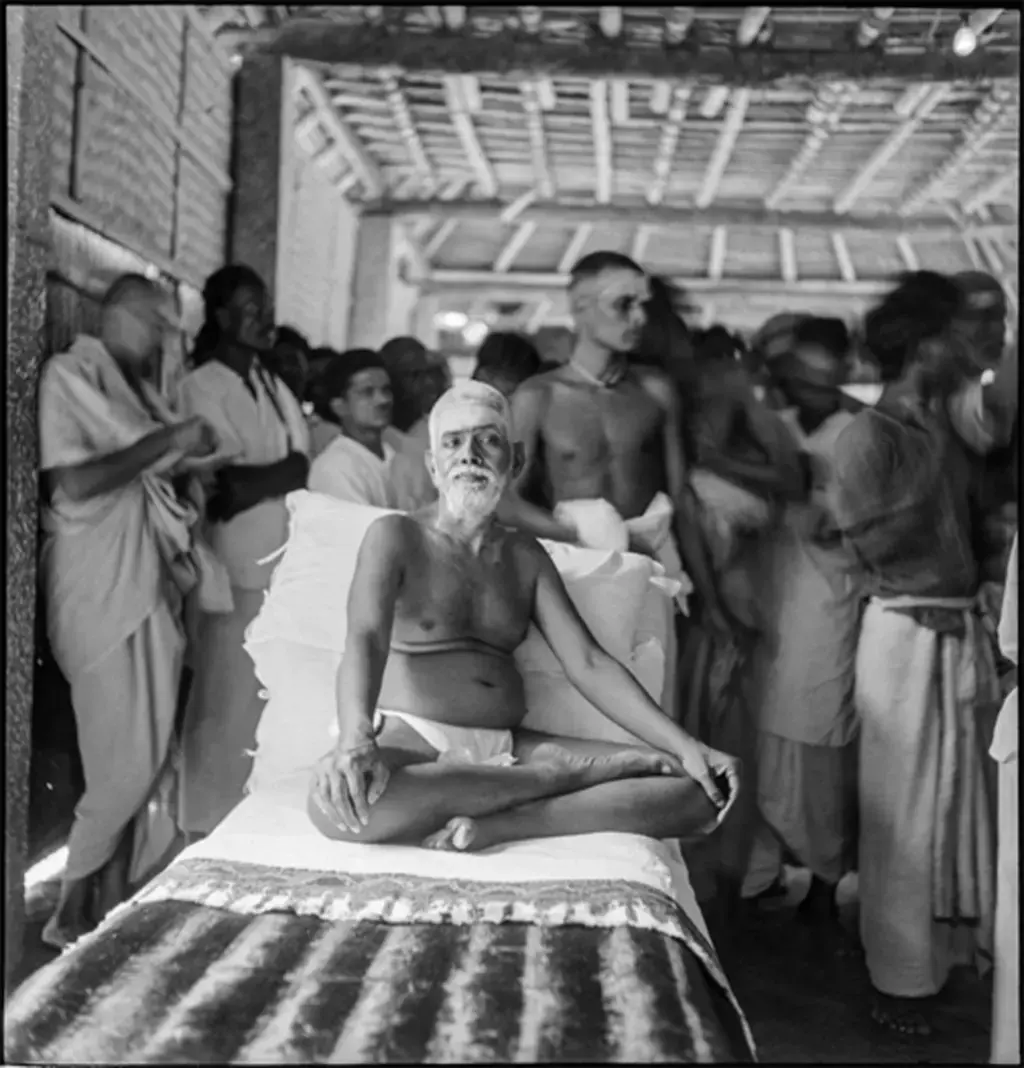
Death and, to a lesser degree, Life and Rebirth, form the subject-matter of the majority of the questions asked by visitors. Death is the greatest catastrophe men dread.
To the Maharshi, death, like life, is a mere thought. When you are “awake,” you incessantly think, and when you go to sleep and dream, you do not think any the lesser. But when you pass from dreamful to dreamless sleep, your thoughts cease and you enjoy undisturbed peace, till you wake again and resume your thinking and with it your restless, peace-less state.
Life is miserable because it consists of nothing but thoughts. When death strikes down the body, the dreamless, thought-free state prevails for a brief period, but soon thinking starts again in the dream – “astral” – world, and continues till a full “waking” takes place in a new body, after another dreamless lull. This daily cycle of waking and sleeping is a miniature of the cycle of life and death in man and the universe, of alternation of activity and rest. The substance of the former is thoughts and sensations and of the latter the peaceful being from which these arise. To transcend birth and death we have, therefore, to transcend the processes of thought and abide in the eternal being.
Death
A visitor asks Sri Maharshi:
Visitor: How can the terrible fear of death be overcome?
Bhagavan: When does that fear seize you? Does it come when you do not see your body, say, in dreamless sleep, or when you are under chloroform? It haunts you only when you are fully “awake” and perceive the world, including your body. If you do not see these and remain your pure self, as in dreamless sleep, no fear can touch you.
If you trace this fear to the object, the loss of which gives rise to it, you will find that that object is not the body, but the mind which functions in it and through which the environment and the attractive world is known as sights, sounds, smells, etc. Many a man would be too glad to be rid of his diseased body and all the problems and inconvenience it creates for him if continued awareness were vouchsafed to him. It is the awareness, the consciousness, and not the body, he fears to lose. Men love existence because it is eternal awareness, which is their own Self. Why not then hold on to the pure awareness right now, while in the body and be free from all fear?
Mr.Rappold, an American devotee opens his eyes from meditation in which he seems to have been deeply sunk and raises his voice: Rappold: Bhagavan, what should a devotee do at the time of death?
Bhagavan: A devotee never dies, rather he is already dead. (Then he stops and waits for a competent translator. Devaraja Mudaliar enters. Bhagavan completes the answer.) What should a devotee do at the time of death? What can he do?
Whatever a man thinks in his life-time, so he does in his last moment – the worldly man thinks of his worldly affairs and the devotee of devotion and spiritual matters. But a Jnani, having no thoughts of any kind, remains the same. His thoughts, having died long ago, his body also died with them. Therefore, for him there is no such thing as death.
Again, people fear death because they fear to lose their possessions. When they go to sleep, they do not have such fear at all. Although sleep resembles death in leaving all possessions behind, it causes no fear in their hearts because of the knowledge that the next morning they will enter into their possessions once again. The Jnani, having no sense of possession, is entirely free from the fear of death. He remains the same after death as before it.
Rebirth
A Mysorean, Mr.M. had read some Theosophical books and stayed here for some months trying to digest them. He wanted to know about rebirths.
Mysorean: Theosophy speaks of 50 to 10,000-year intervals between death and rebirth. Why is this so?
Bhagavan: There is no relation between the standard of measurements of one state of consciousness and another. All such measurements are hypothetical. It is true that some individuals take more time and some less. But it must be distinctly understood that it is not the soul that comes and goes, but the thinking mind of the individual, which makes it appear to do so. On whatever plane the mind happens to act, it creates a body for itself: in the physical world a physical body, in the dream world a dream body, which becomes wet with dream rain and sick with dream diseases. After the death of the physical body, the mind remains inactive for some time, as in dreamless sleep, when it remains world less and therefore bodiless. But soon it becomes active again in a new world and a new body – the astral – till it assumes another body in what is called a “rebirth”. But the Jnani, the Self-Realised man, whose mind has already ceased to act, remains unaffected by death: it has dropped never to rise again to cause births and deaths. The chain of illusions has snapped forever for him.
It is now clear that there is neither real birth, nor real death. It is the mind which creates and maintains the illusion of reality in this process, till it is destroyed by Self-Realisation.
Ethel Witnessed
Ethel would sometimes sense Bhagavan’s communion voicelessly with someone in the hall; it was as though a current or pulsation was flowing from him towards the person. One day, Ethel felt the current reciprocated. An elderly sannyasi had come to see Bhagavan, and Bhagavan dropped the book he was reading to look at the man. In Bhagavan’s gaze there was love and joy. The two gazed at each other silently, and one could feel the flow of current going back and forth between them. They talked voicelessly for about ten or fifteen minutes, then the sannyasi dropped to the floor and passed into samadhi for the next two hours. Bhagavan took up the book again and continued reading.
Ethel also recalled an old man in the hall sitting at the back, blind, half paralyzed and seemingly half mad. One day he suddenly jumped up, his face radiant, laughed loudly and bowed to Bhagavan first and then to all the devotees repeatedly. He looked very happy, and Bhagavan smiled radiantly at him, with all love in his eyes. Later, the old man said that at that moment he had got the realization of the Self for which he had been searching for the last fifty years. His face was simple and child-like.
— From Women Devotees, Ethel MerstonThe Marks of Muruga
and
All the Symbolic Forms Found in Sri Ramana
A Question-Poem and Answer-Poem by the Maharshi
For a number of devotees, Sri Bhagavan was in fact Muruga incarnate. At his feet they laid all of their concerns, both worldly, as well as concerns regarding their spiritual fulfilment, that is, seeking freedom from birth and death, by realizing their own immutable true nature.
Once a devotee named Sentamizh K.V.Ramachandra Iyer visited Sri Bhagavan when he resided in the Virupaksha cave. He came on this visit with an objective. This particular visit was recorded in Sri Kunju Swami’s book Enadu Ninaivugal (My Reminiscences).
Sri Kunju Swami relates that K.V.Ramachandra Iyer approached Sri Bhagavan with the feeling that he was indeed Lord Muruga. Yet, there was a question in his mind that if this was true, where were the divine markings of Muruga on Sri Bhagavan, such as the javelin (Vel), peacock and other accoutrements? Ramachandra Iyer was an accomplished Tamil poet, so he put this question to Sri Bhagavan, couched in a poetic Venba meter. Bhagavan’s poetic answer is found in The Collected Works. Both of the poems’ true import and meaning have been further clarified by Hari Moorthy’s translation and short commentary below.
வேலெங்கே கோலஞ்சேர் வெற்பெங்கே அன்னைதரும்
பாலெங்கே யீராறு பாகெங்கே - நீலெங்கும்
ஏய்க்கும் கலாபமயி லெங்கே யுரைரமண
தாய்க்குக்கி வாழளவில் தான்
velēṅke kolañcer vēṟpēṅke aṉṉaitarum
pālēṅke yīrāṟu pākēṅke - nīlēṅkum
eykkum kalāpamayi lēṅke yurairamaṇa
tāykkukki vāḻal̤avil tāṉ
Meaning: “Where is your mighty spear? Where is the hillock that enhances your divine beauty? Where is the milk lovingly offered by your mother, Umadevi? Where are your twelve resplendent arms? Where is the peacock with its dazzling feathers, capable of traversing the entire earth? Pray, tell us, why do you now dwell in the form of Lord Ramana, under worldly mother’s abode, instead?”
Sri Bhagavan, in order to clarify his devotee’s doubts, replied as follows, mirroring Sri Ramachandra’s exact words:
வேலுண்டே சோதிகுண வெற்புண்டே அன்னையருள்
பாலுண்டே பன்னிரெண்டு பாகுண்டே - நீலுண்டே
ஏய்க்குமன மாமயிலுண் டேயுலகிலே ரமணன்
தாய்க்குக்கி வாழலளில் தான்
veluṇṭe cotikuṇa vēṟpuṇṭe aṉṉaiyarul̤
pāluṇṭe paṉṉirēṇṭu pākuṇṭe - nīluṇṭe
eykkumaṉa māmayiluṇ ṭeyulakile ramaṇaṉ
tāykkukki vāḻalal̤il tāṉ
Meaning: “There is the spear (shining as wisdom). There is the supreme effulgence, manifesting as a radiant mountain (Arunachala). There is the mother’s milk (flowing as divine grace). There are twelve arms (offering refuge and protection to all devotees). There is the world, and within it, a vast illusion (Maya) in the form of the mind, symbolized by the peacock. Yes, all of these reside within Ramana, who dwells in the worldly abode of the mother, as the very Self.”
Comment: In this verse, Bhagavan offers us a direct assurance of His identity as the supreme Self, within whom all the symbolic forms of Lord Muruga are contained. His spear represents wisdom, embodied in the practice of Self-inquiry. His supreme effulgence is Arunachala itself, symbolizing His divine presence. His twelve arms are the refuge and protection He offers to all who surrender to Him. He is present in the world, where the great Maya Shakti manifests as individual minds through its illusory power. Yet, all these forms and appearances are but different facets of the supreme, undivided and undifferentiated Self – Ramana